
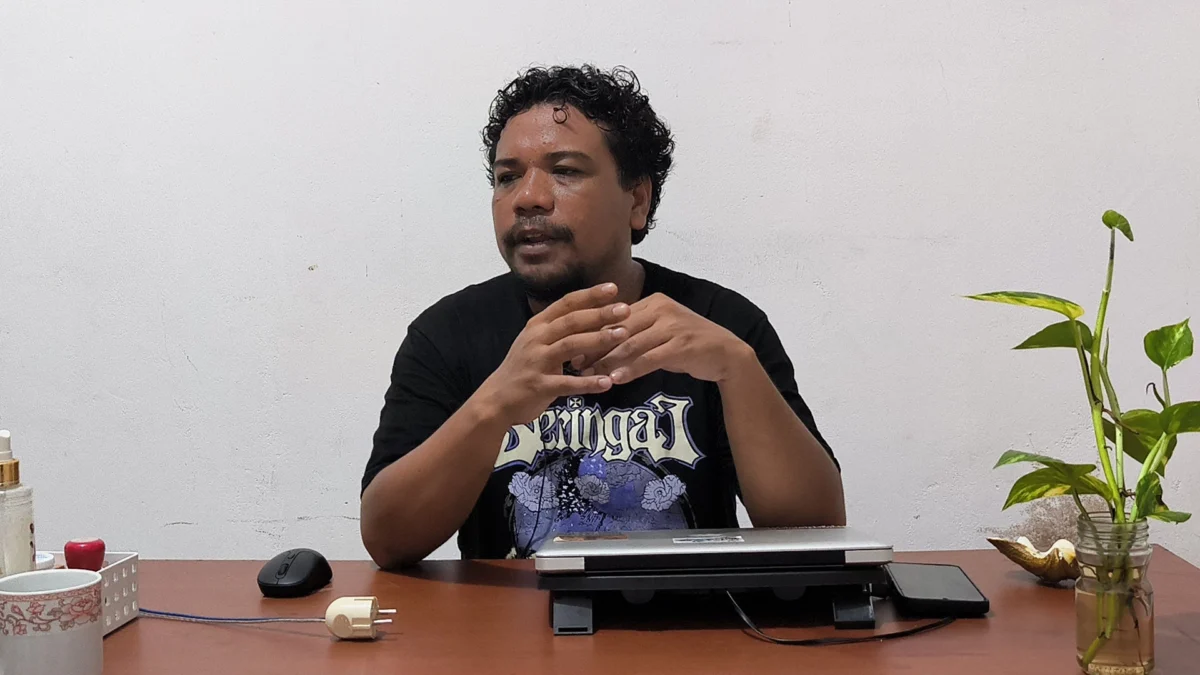
The escalating global demand for critical minerals required for the green energy transition has increasingly placed Indigenous communities on the front lines of environmental and territorial conflicts. In Indonesia’s Central Halmahera Regency, this global pressure has materialized at the local level, where fourteen Indigenous residents of Sagea-Kiya Village now face potential criminal prosecution. Their alleged offense: defending their ancestral lands against the rapid and largely unconsented expansion of nickel extraction.
Reported by PT Zhong Hai Rare Metal Mining Indonesia, the villagers find themselves entangled in a high-stakes legal battle that civil rights advocates argue exemplifies a dangerous and growing trend of criminalizing environmental defenders. The case highlights systemic tensions between national industrial ambitions—specifically Indonesia’s aggressive push to become a dominant hub for electric vehicle battery supply chains—and the fundamental rights of Indigenous populations whose livelihoods, water sources, and cultural heritage are intrinsically tied to their customary territories.
Chronology of Conflict: From Peaceful Boycott to Police Probes
The friction between Sagea-Kiya residents and corporate interests did not emerge overnight; rather, it represents the culmination of years of mounting anxieties regarding environmental degradation. The current legal proceedings are anchored to a specific sequence of events that began in early February 2026, catalyzed by a breakdown in communication between the community and mining operators.
On February 5, 2026, local residents, acting alongside the civil society coalition Save Sagea, established a protest camp near the jetty crossing operated by PT Zhong Hai Rare Metal Mining Indonesia. The action was designed as a peaceful boycott to halt mining operations after repeated attempts to engage corporate management in meaningful dialogue allegedly proved futile.
According to eyewitness accounts, tensions escalated shortly after the camp was established. Four foreign nationals, identified as workers for the mining firm, approached the protest structure and attempted to dismantle it. The dismantling process resulted in structural damage to the tent, provoking anger among the demonstrators and precipitating a physical confrontation between the villagers and company personnel.
The corporate response was swift. On the same day as the protest, company representatives filed a police report—Registered as LP/B/26/II/2026/RES Halteng/SPKT—alleging assault and obstruction of legal business operations. Within 72 hours, the Central Halmahera Police initiated formal inquiries. Save Sagea activist and resident Lada Ridwan received the first police summons for clarification on February 8, followed closely by formal inquiry orders issued on February 6.
By late February, the local police apparatus consolidated multiple separate reports—initially targeting individual residents such as Indigenous women Rifya Rusdi and Sulastri Mahmud alongside approximately twelve others—into a single comprehensive investigation. On February 26, 2026, investigators submitted a Notice of Commencement of Investigation (SPDP Number SPDP/01/1/RES.5./2026/DITRESKRIMSUS) to the North Maluku High Prosecutor’s Office, formally transitioning the dispute from a local grievance to a serious criminal matter.
Legal Architecture and the Controversial Minerba Law
At the center of the legal jeopardy facing the fourteen residents is Article 162, in conjunction with Article 136 paragraph (2), of Law Number 3 of 2020. This legislation represents amendments to the foundational Mineral and Coal Mining Law (Minerba Law), provisions that were subsequently reinforced by Law Number 6 of 2023, which ratified the contentious Job Creation Regulation (Omnibus Law) into national statute.
Article 162 of the Minerba Law has long drawn fierce criticism from legal scholars, human rights organizations, and environmental NGOs across Indonesia. The statute criminalizes any actions deemed to "disturb or obstruct" mining business activities authorized under valid permits. Critics argue that the law is frequently weaponized by corporate actors and state authorities to circumvent constitutional protections for customary land rights, effectively transforming civil disobedience, peaceful protest, and environmental advocacy into criminal offenses.
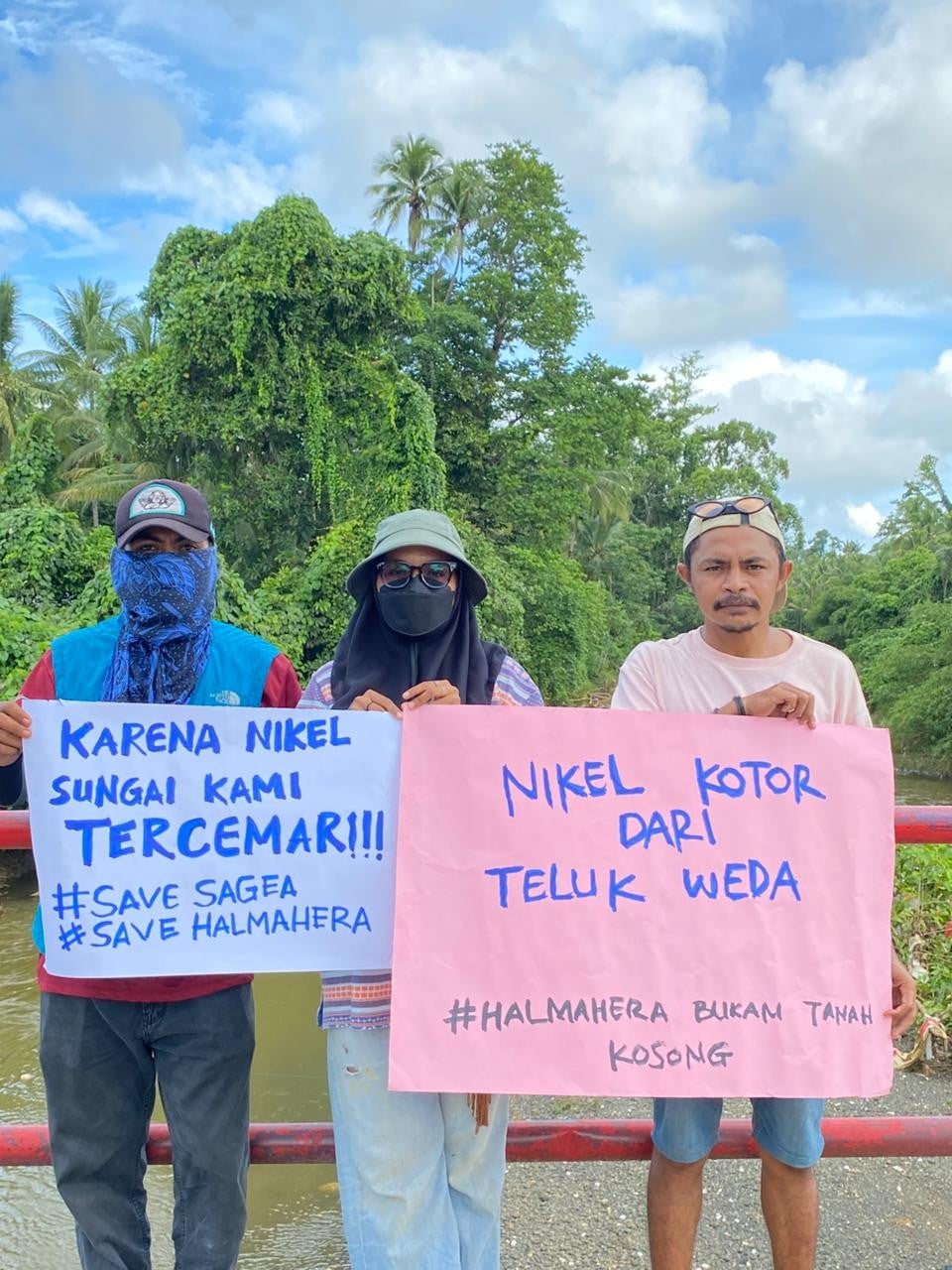
Fahrizal Dirhan, head of the Save Sagea Advocacy Team providing legal representation to the accused villagers, emphasized the systemic injustice of applying this statute to community members defending their homes. According to Dirhan, the core grievance of the Sagea-Kiya people stems from a fundamental lack of procedural justice: local residents were never meaningfully consulted, nor were they actively involved when their ancestral territories were originally designated as commercial mining concessions.
"The people of Sagea-Kiya were not actively involved from the beginning when their territory was determined as a mining business location," Dirhan stated. "The community views this investment and extractive development program as management of their land without their participation."
Legal counsel has firmly rejected allegations that Rifya Rusdi and Sulastri Mahmud acted as unauthorized instigators or malicious ringleaders of the protest. Instead, the defense maintains that the mobilization was an organic, community-wide reaction to legitimate fears regarding the destruction of local water tables, marine ecosystems, and forests that sustain generations of Indigenous families.
Broader Context: Extractive Expansion in North Maluku
The legal targeting of Sagea-Kiya residents is not an isolated incident within the province of North Maluku, an epicenter of Indonesia’s multi-billion-dollar nickel boom. The region has experienced an unprecedented influx of foreign and domestic investment aimed at feeding the global clean energy transition, particularly smelting and processing facilities designed to supply materials for lithium-ion batteries.
However, this industrial expansion has frequently bypassed the principle of Free, Prior, and Informed Consent (FPIC) enshrined in international human rights frameworks. Civil society groups have documented a recurring pattern across Halmahera and surrounding islands, where Indigenous communities resisting corporate encroachment face intimidation, administrative hurdles, and criminal prosecution.
A highly analogous situation occurred in 2025, when eleven members of the Maba Sangaji Indigenous Community in neighboring East Halmahera Regency faced formal prosecution after staging protests against mining activities encroaching upon their sacred forests and traditional farming grounds. Legal analysts note that these parallel cases underscore a systemic governance failure: local populations bear the immediate ecological and social costs of extraction, while legal frameworks consistently prioritize corporate operational security over citizen rights.
Furthermore, community advocates have voiced frustration regarding the perceived passivity of local government institutions. Critics argue that regional authorities have failed to act as neutral arbiters or providers of effective mediation, instead allowing corporate legal teams to utilize the criminal justice system to suppress legitimate public dissent.
Implications for Environmental Defenders and Future Energy Policy
The ongoing investigation into the fourteen Sagea-Kiya residents carries profound implications far beyond the borders of Central Halmahera. As international markets demand ethical and sustainable supply chains for critical minerals, the criminalization of local land defenders presents a significant reputational and ethical challenge for multinational corporations and international financiers linked to Indonesian nickel projects.
For local communities, the aggressive enforcement of the Minerba Law creates an atmosphere of intimidation, discouraging citizens from voicing legitimate environmental concerns or demanding accountability from powerful industrial conglomerates. The Save Sagea Advocacy Team has called upon national civil society organizations, environmental coalitions, and human rights watchdogs to maintain vigilant oversight of the legal proceedings as they move toward potential indictments or trial phases.
While the legal team continues to explore avenues for third-party mediation and constructive engagement with local authorities, Dirhan stressed that any pursuit of dialogue must not be misconstrued as an admission of guilt or a surrender of Indigenous territorial rights. As investigators weigh whether to formally name the fourteen individuals as suspects, the case stands as a stark reminder of the human cost exacted by the global energy transition—a transition that, in places like Sagea Village, risks repeating historical patterns of marginalization under the banner of green industrial progress.




