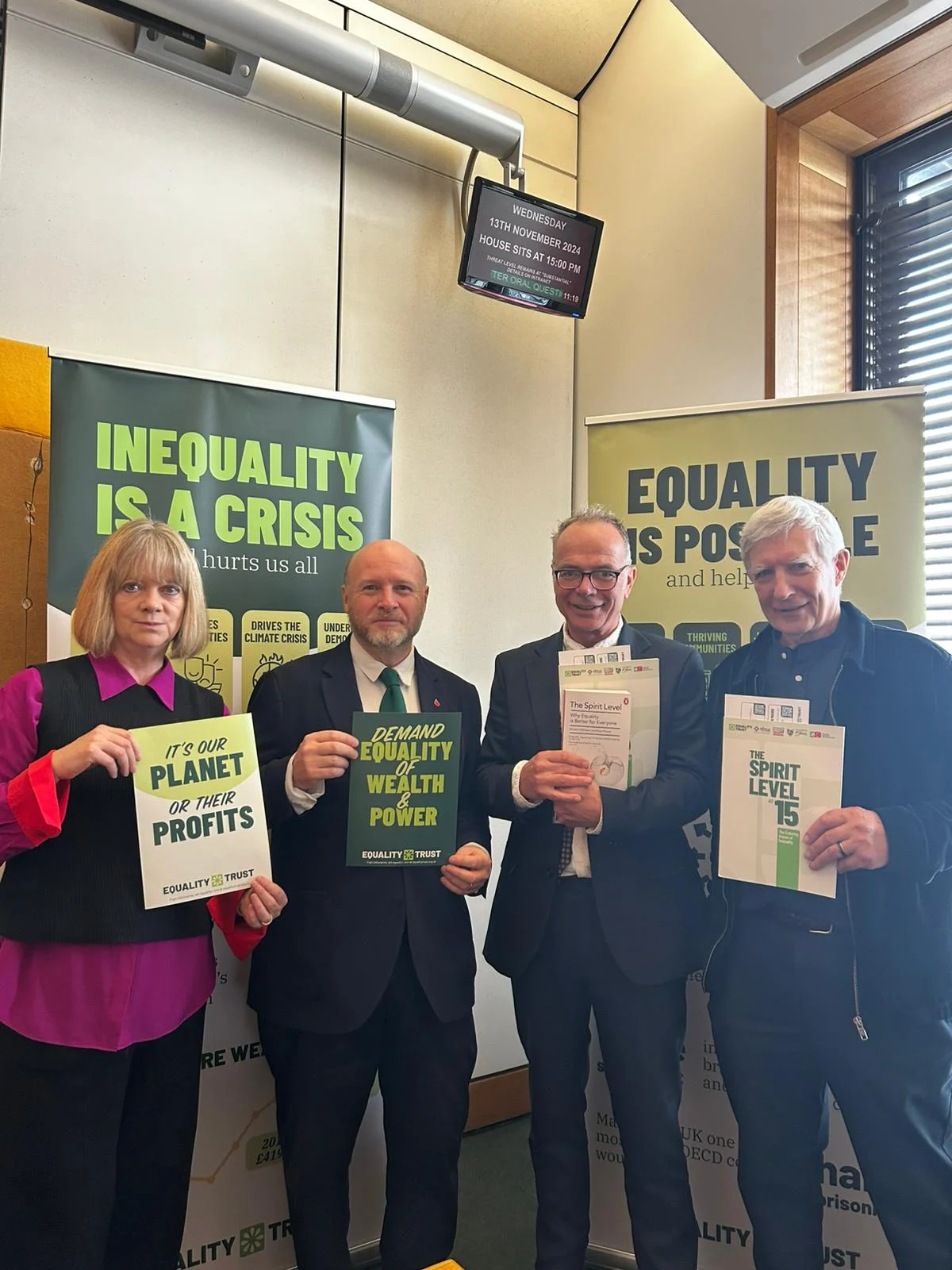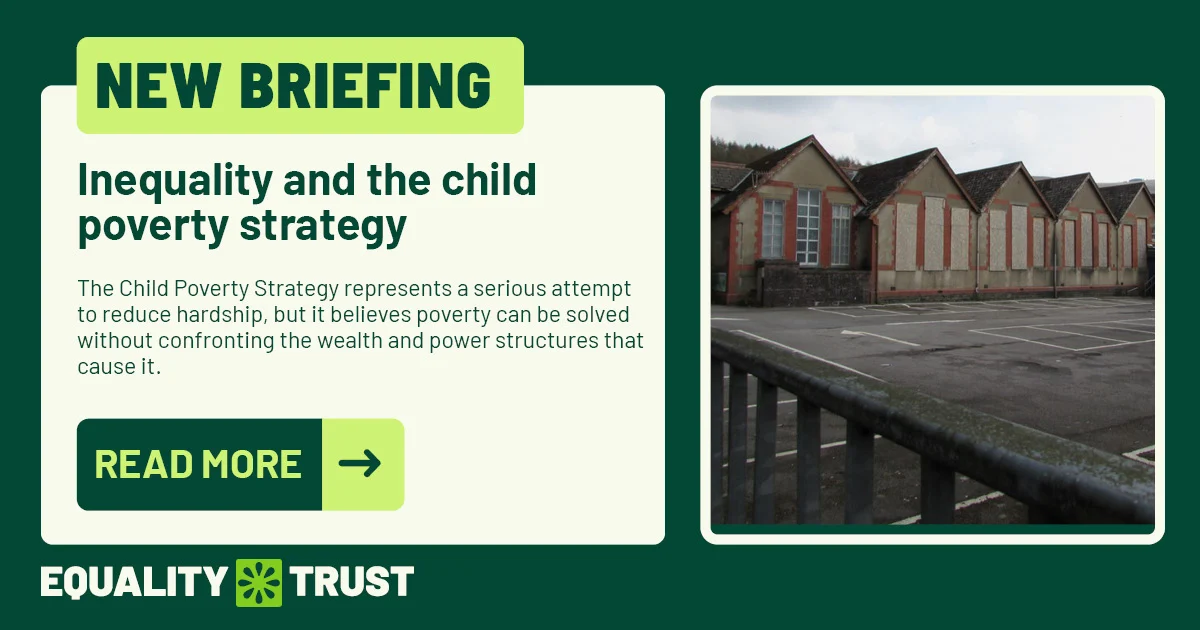
On January 13, 2026, the Public Policy Exchange hosted a high-level seminar titled "Tackling Child Poverty: Improving Welfare, Security and Future Prospects." The event served as a critical forum for policy analysts, social advocates, and government representatives to dissect the UK government’s recently unveiled Child Poverty Strategy. Among the keynote contributors was Priya Sahni-Nicholas, Co-Executive Director of The Equality Trust, who presented a comprehensive analysis of the government’s approach. While acknowledging a significant ideological shift away from the punitive rhetoric of the previous decade, Sahni-Nicholas argued that the strategy remains fundamentally incomplete. Her central thesis posits that while the government has successfully identified poverty as a systemic failure, it continues to ignore the structural role of wealth concentration and power imbalances that perpetuate economic hardship.
A Decisive Break from Post-2010 Policy Frameworks
The Child Poverty Strategy, released in December 2025, represents the first comprehensive, UK-wide effort to address the issue since the expiration of the previous Labour government’s targets. The document explicitly frames child poverty not as a consequence of individual choices or parental failings, but as a "moral, economic, and public-services failure" inherited from over 15 years of austerity-driven policy choices. The stated ambition of the strategy is twofold: to secure a measurable reduction in child poverty within the current parliament and to eliminate it entirely over the long term.
For over a decade, the United Kingdom has stood as an outlier among advanced economies. While many European nations saw child poverty rates stabilize or decline through robust social safety nets, the UK experienced a steady upward trajectory. By the start of 2026, official figures indicated that 4.5 million children—approximately one in three—were living in poverty. Perhaps more staggering is the data suggesting that nearly 20% of UK children reside in households experiencing "food insecurity," defined as the inability to consistently access sufficient, nutritious food. The new strategy is, therefore, a reactive measure to a crisis that has reached a critical boiling point.
Chronology of the UK Child Poverty Crisis (2010–2026)
To understand the weight of the 2025 strategy, it is essential to trace the legislative and economic path that led to the current emergency. Following the 2010 general election, the UK government implemented a series of welfare reforms under the banner of fiscal consolidation. Key milestones included the introduction of the "benefit cap," the "bedroom tax," and, most controversially, the 2017 introduction of the "two-child limit" on Universal Credit and Child Tax Credit.
By 2022, the cost-of-living crisis, fueled by soaring energy prices and double-digit inflation, pushed an additional 300,000 children into relative poverty. Throughout 2023 and 2024, social advocacy groups and international bodies, including the United Nations, issued repeated warnings regarding the "destitution" appearing in UK communities. The 2025 strategy was born out of this sustained pressure, marking a legislative pivot that many advocates have sought for over a decade.
Identifying the "Wins": Policy Shifts and Income Redistribution
The Equality Trust’s analysis highlights several areas where the government has made genuine progress. The most significant policy intervention is the abolition of the two-child limit. Economic modeling suggests this single move will lift approximately 450,000 children out of relative poverty, addressing a policy that has been widely criticized for disproportionately affecting larger families and ethnic minority households.
Furthermore, the strategy demonstrates a commitment to "lived experience." By integrating insights from initiatives like "Changing Realities," the government has moved away from tokenistic consultation. The strategy acknowledges the "mental load" of poverty—the psychological toll of navigating complex bureaucracy while managing financial scarcity—and emphasizes the restoration of dignity to the welfare system.

Other notable successes identified in the strategy include:
- The Recognition of In-Work Poverty: Moving past the "work is the best route out of poverty" mantra, the strategy acknowledges that low pay and insecure "gig economy" contracts are primary drivers of hardship.
- Cost-of-Living Interventions: The expansion of free school meals, the establishment of national breakfast clubs, and new caps on school uniform costs target the immediate financial "leakage" that drains low-income household budgets.
- A Spatial and Intersectional Lens: The government has acknowledged that poverty is not uniform, showing a deep understanding of how geography, disability, and ethnicity compound disadvantage.
The Wealth Gap: The Invisible Barrier to Long-Term Security
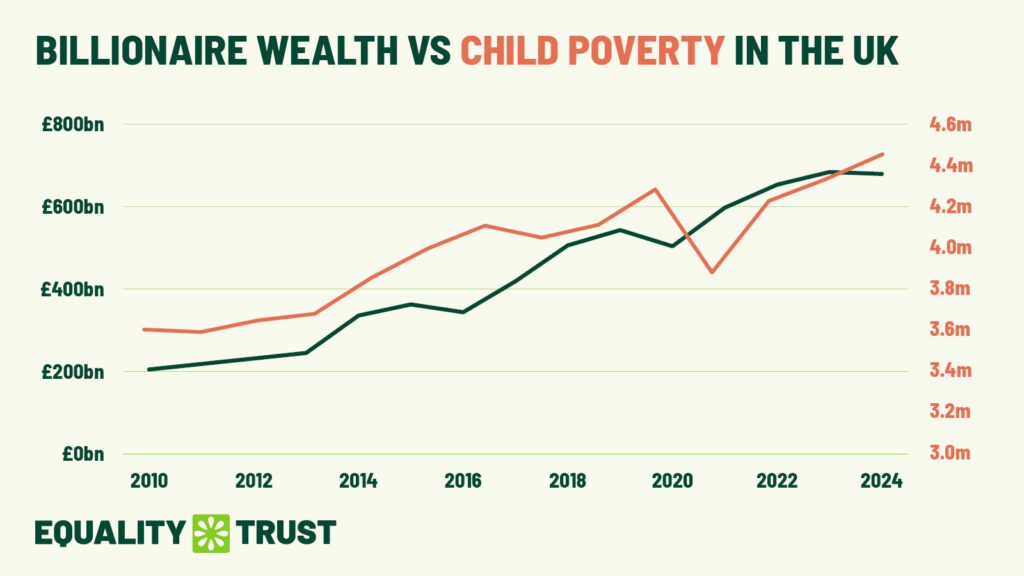
Despite these advancements, Sahni-Nicholas and The Equality Trust argue that the strategy suffers from a "narrow understanding of inequality." The most glaring omission in the 400-page document is the word "wealth." In the current UK economy, poverty is treated as a problem of insufficient income, yet the Equality Trust argues it is more accurately described as the "bottom end of a highly unequal distribution of assets."
Wealth—encompassing property, savings, pensions, and investments—is a more potent predictor of long-term security than income alone. Families with identical incomes can have vastly different life outcomes depending on their access to assets. A household with modest savings or home equity can weather a sudden job loss or medical emergency; a household without such assets is one paycheck away from destitution.
The strategy’s silence on wealth concentration reflects a broader reluctance to engage with structural economic reform. While the government aims to increase the "floor" for the poorest, it has proposed no measures to address the "ceiling" of the ultra-wealthy. This is particularly relevant in the context of "r > g"—the economic principle popularized by Thomas Piketty, which states that when the rate of return on capital (wealth) grows faster than the economy (wages), inequality widens structurally. By focusing solely on wages and benefits, the government is attempting to "empty a bath while leaving the taps running."
Power Dynamics and Corporate Influence
A second major critique involves the "unspoken dimension" of power. The Equality Trust maintains that children are not poor by accident; they are poor because the economic system is designed to prioritize capital over labor. The strategy discusses "opportunity" and "life chances," but it avoids the more difficult conversation about how corporate power, housing market deregulation, and the political influence of the wealthy shape the conditions of poverty.
Historical data suggests that the most successful periods of poverty reduction in the UK were not the result of targeted welfare tweaks, but of broad shifts in the balance of power. Following the Second World War, the UK saw a sustained decline in inequality driven by high marginal tax rates on top earners, the expansion of collective bargaining through trade unions, and the massive build-out of social housing. During this era, child poverty fell because the gains of the economy were distributed more equitably by design, not just by redistribution.
Fiscal Implications and the Need for Reform
The current strategy relies heavily on the premise that investment in public services must be funded by economic growth. However, Sahni-Nicholas points out a fundamental flaw in this logic: the majority of UK government revenue is derived from taxes on wages and consumption. Because returns on assets (capital gains, dividends) are currently taxed at a significantly lower rate than work, the government is effectively limiting its own ability to fund social transformation.
A truly transformative child poverty strategy would link social outcomes to fiscal reform. This would involve:

- Equalizing Tax Rates: Ensuring that income from wealth is taxed at the same rate as income from labor.
- Wealth Taxes: Implementing annual levies on extreme wealth to fund universal public services.
- Housing Reform: Addressing the "rent trap" by capping private rents and reinvesting in social housing to ensure that income increases are not immediately absorbed by landlords.
Broader Impact and Future Outlook
The reaction from the wider policy community has been mixed. While the Joseph Rowntree Foundation and the Child Poverty Action Group (CPAG) have hailed the abolition of the two-child limit as a "landmark victory," others remain skeptical of the strategy’s long-term viability without binding targets.
Critics from the opposition have raised concerns about the fiscal burden of the new measures, while advocates on the left argue the strategy does not go far enough to dismantle the "hostile environment" for welfare claimants. However, the consensus remains that the 2025 strategy has successfully shifted the national conversation. Poverty is once again a core national priority.
For the strategy to evolve from a "necessary corrective" to a "transformative break," The Equality Trust suggests that the next phase of policy must include binding targets to narrow the gap between the richest and poorest 10% of households. Success should not be measured merely by how many children are moved £1 above an arbitrary poverty line, but by how the overall distribution of resources in society is reshaped.
Conclusion: The Path to 2030
As the UK moves toward the end of the decade, the effectiveness of the Child Poverty Strategy will be judged by its ability to withstand economic fluctuations. If the government continues to ignore the concentration of wealth at the top, any gains made through income redistribution may prove fragile.

The Equality Trust’s analysis serves as a reminder that ending child poverty is a political choice, not an inevitability of the market. To achieve a society where every child has the security to thrive, the government must eventually move beyond "improving welfare" and begin the more difficult work of "restructuring power." Only by confronting the systemic inequality that allows extreme wealth to coexist with child hunger can the UK truly fulfill its moral and economic obligations to the next generation.