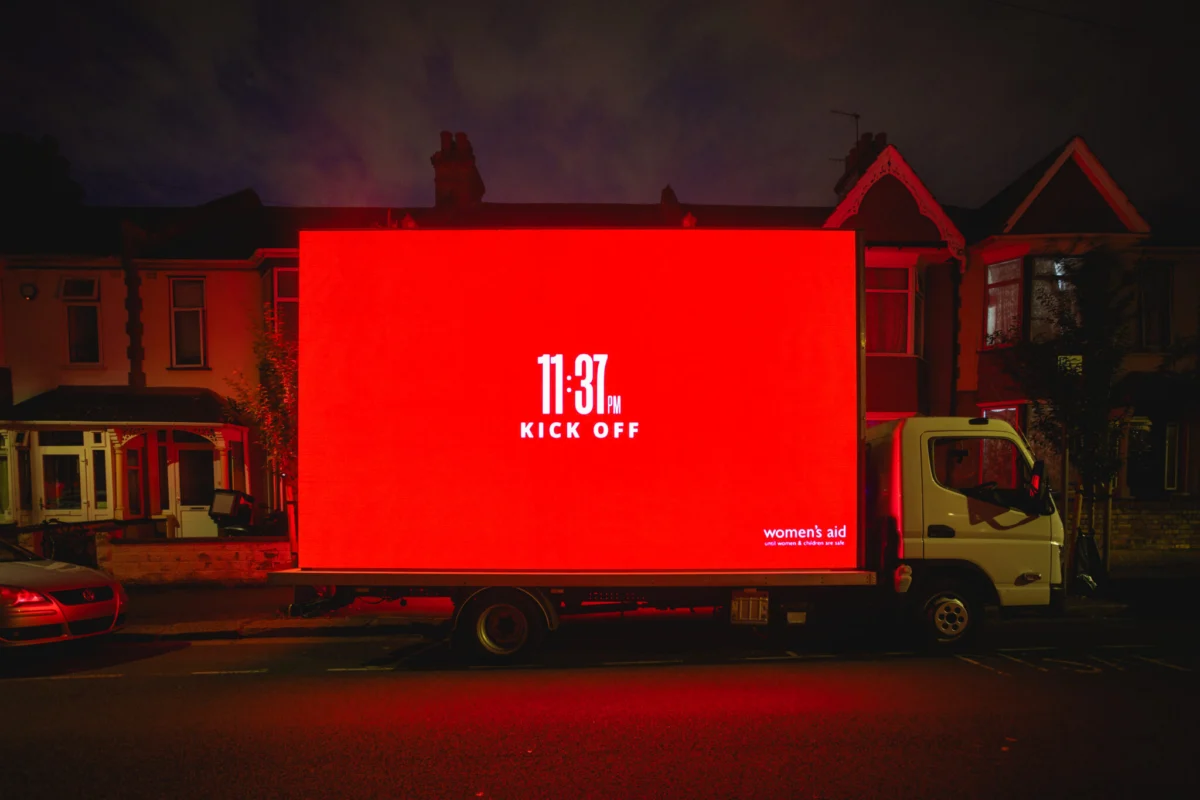
London, UK – As England’s national football team geared up for their opening World Cup fixture on June 17, 2026, a starkly different "kick-off" was simultaneously announced across the nation. Women’s Aid, the UK’s leading national domestic abuse charity, launched a powerful new public awareness campaign titled "The Other Kick Off," drawing critical attention to the predicted surge in domestic abuse incidents following major football tournaments. The campaign spotlights a chilling, alternative "kick-off time" of 11:37 pm, representing the moment many women and children living with abuse fear most: when abusive partners return home after watching the match, often fueled by heightened emotions and alcohol consumption.
This initiative is a continuation of Women’s Aid’s sustained efforts to shed light on a grim reality often overshadowed by national sporting euphoria. By hijacking the universally recognized question, "What time is kick-off?", the campaign deliberately redirects public focus from the celebratory start of the game to the sinister aftermath for thousands of vulnerable individuals. The late-night timing of many World Cup matches this year adds another layer of isolation and fear for survivors, making the message even more poignant and urgent.
A Deep Dive into "The Other Kick Off" Campaign
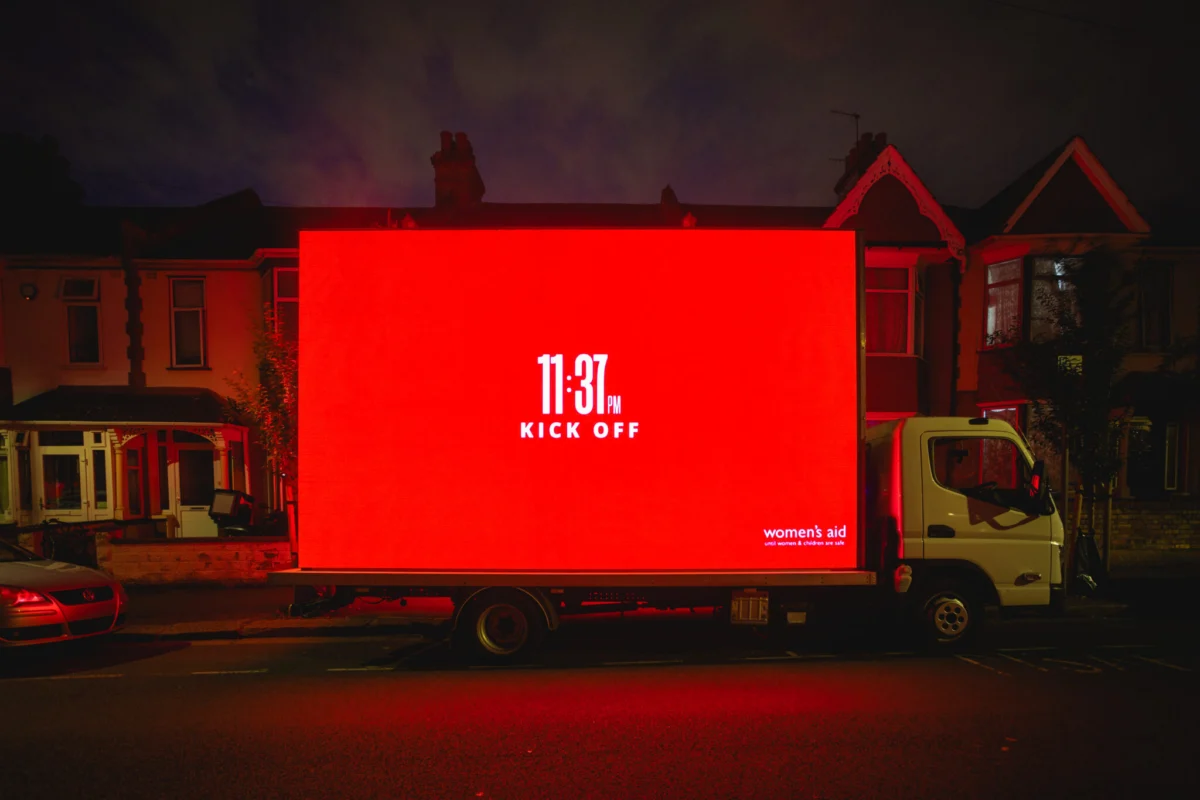
The core of "The Other Kick Off" campaign lies in its strategic, high-impact visibility. Women’s Aid has deployed its message across prominent digital billboards, mobile vans, and fly posters strategically positioned near major fan zones and football hotspots throughout London. The visual impact is designed to stop passers-by in their tracks, confronting them with a reality that stands in stark contrast to the festive atmosphere of the World Cup. Each poster prominently features the ominous time of "11:37 pm" alongside a clear call to action: a QR code that directs individuals to Women’s Aid’s comprehensive website. This digital gateway offers vital support resources, information on recognizing the signs of domestic abuse, opportunities to donate, and ways for concerned individuals to take action.
The calculation of 11:37 pm as "the other kick-off time" is meticulously derived, reflecting the average duration of a football match, including half-time intervals and any additional stoppage time, followed by an estimated period for post-match drinking and travel home. This specific timestamp aims to encapsulate the moment of dread and heightened risk for survivors, serving as a powerful, quantifiable symbol of a pervasive societal problem. The campaign’s creative approach and direct messaging echo the charity’s impactful 2022 "He’s Coming Home" campaign, which similarly leveraged the cultural prominence of football to deliver a vital domestic abuse awareness message.
The Troubling Link: Football Tournaments and Domestic Abuse
The campaign is rooted in extensive, longstanding research that has consistently demonstrated a disturbing correlation between major football tournaments and an increase in domestic abuse incidents. A seminal study by Kirby and Francis (2014), published in the Journal of Research in Crime and Delinquency, provided compelling statistical evidence, revealing a significant rise in reported incidents. Specifically, their research indicated that domestic abuse incidents increase by a staggering 38% when England loses a match and by 26% even when they win or draw.
While football itself is not the direct cause of domestic abuse, the context surrounding these major events creates a potent cocktail of risk factors. Heightened emotions, intense nationalistic fervor, increased alcohol consumption, and prolonged periods of communal viewing can act as catalysts, exacerbating existing abusive dynamics within relationships. For perpetrators, the emotional volatility of a match – whether it’s the frustration of a loss or the exhilaration of a victory – can become a perverse justification or trigger for violent behaviour. For victims, the public nature of these events can make seeking help even more challenging, as societal focus is elsewhere, and the home can feel like an inescapable cage.
This pattern is not unique to football but has been observed in relation to other major sporting events globally, suggesting a broader phenomenon where periods of high social tension, widespread alcohol use, and male-dominated cultural rituals can create environments conducive to the escalation of domestic violence. The consistency of these findings across different tournaments and studies underscores the urgent need for targeted interventions and public awareness campaigns like "The Other Kick Off."
Voices from the Frontline: Leadership and Advocacy

Farah Nazeer, CEO of Women’s Aid, articulated the charity’s mission with profound clarity and urgency. "The World Cup is a wonderful opportunity for us to come together and cheer on our team," she stated, acknowledging the shared joy many experience. "However, for women and children living with domestic abuse, ‘kick-off’ has a different meaning. For those living with abuse, the final whistle of the game signals the beginning of something frightening and potentially life-threatening." Nazeer emphasized that while football doesn’t cause abuse, the associated factors undeniably increase its frequency and severity. Her message was unequivocal: "Whether England wins, loses or draws, no woman or child should live in fear of that final whistle blow. We hope that our campaign helps raise awareness of this heinous crime, while also signposting people to support, not only for themselves, but for loved ones they’re concerned about." Her words underscore the dual reality of the World Cup: a celebration for many, a period of heightened danger for others.
Joining the call for awareness, Women’s Aid Ambassador Charlie Webster, a prominent broadcaster and survivor of domestic abuse, shared her perspective on the campaign’s vital role. "The World Cup is one of those rare moments when the whole country holds its breath together – united, hopeful, alive! That joy is real, and it’s precious," Webster reflected, acknowledging the collective national spirit. "But for women and children living with domestic abuse, tournament time brings something very different: heightened fear, and heightened danger. That is a reality we cannot look away from." Webster’s personal connection to the issue lends significant weight to her advocacy, as she champions the idea that football, as "our game," should be a space of safety for everyone. She affirmed her pride in contributing to efforts "to change that, and make sure that when England plays, every woman at home is safe." Her powerful statement highlights the ethical responsibility of the wider football community and society at large to protect the most vulnerable.
Governmental Response and Strategic Interventions
The campaign also garnered a strong response from the government, with Natalie Fleet, Minister for Safeguarding and Violence Against Women and Girls (VAWG), expressing unequivocal support. "Nobody should live in fear because of a football match," Minister Fleet asserted, echoing the sentiments of Women’s Aid. "As a Mum and a Nana, I find it heartbreaking that while many families come together to enjoy the World Cup, some women and children are left dreading the final whistle. The latest Women’s Aid campaign shines a powerful light on this reality."
Minister Fleet acknowledged the well-documented escalation of domestic abuse during major sporting events, reiterating that "there is never any excuse for it." She detailed the government’s comprehensive strategy to combat this pervasive issue, highlighting its central role in the broader VAWG Strategy. Key initiatives include the implementation of Raneem’s Law, which places specialist domestic abuse support in 999 control rooms to provide immediate, informed assistance to victims. Furthermore, the nationwide rollout of Domestic Abuse Protection Orders (DAPOs) aims to offer robust legal safeguards for survivors, preventing perpetrators from further abuse. The government is also actively "working with partners to challenge harmful behaviours," signifying a multi-agency approach to prevention and intervention. Minister Fleet concluded with a resolute declaration: "We are clear that enough is enough. We will deploy the full power of the state to halve violence against women and girls in a decade." This commitment from a high-ranking government official underscores the national importance of tackling domestic abuse and the recognition of its specific challenges during events like the World Cup.
Broader Implications and the Call for Collective Action
"The Other Kick Off" campaign transcends a simple awareness message; it serves as a critical call to action for individuals, communities, and institutions. The widespread deployment of the campaign’s message across London, facilitated by generous donations of billboard placements from leading out-of-home media partners like The Outernet and Ocean Outdoor, maximizes its reach and impact. This strategic partnership ensures that the message penetrates the very heart of the World Cup excitement, forcing a confrontation with an uncomfortable truth.
Beyond immediate support for survivors, the campaign aims to foster a societal shift in understanding and responding to domestic abuse. By publicly linking a national celebration with a hidden crisis, Women’s Aid challenges the collective unconscious bias that often allows such issues to remain in the shadows. It prompts football fans, families, and communities to consider the broader social implications of their enjoyment and to extend empathy and support to those for whom the "beautiful game" brings terror.
The existence of robust research, like the Kirby and Francis study, provides an empirical foundation for these campaigns, moving the discussion beyond anecdotal evidence to verifiable patterns. This data empowers charities like Women’s Aid to advocate for systemic changes, including increased funding for support services, enhanced training for frontline responders, and proactive public health campaigns.
The campaign also highlights the crucial role of bystanders. By directing the public to resources, Women’s Aid empowers individuals not only to seek help for themselves but also to recognize the signs of abuse in others and guide them towards support. This collective responsibility is vital in dismantling the secrecy and isolation that often surround domestic abuse.
In essence, "The Other Kick Off" is more than just a World Cup campaign; it is a powerful reminder that while the nation unites in sporting fervor, a significant segment of the population lives in fear. It underscores the enduring commitment of Women’s Aid to ensure that no woman or child should have to dread what happens after the final whistle blows, striving for a future where safety and respect are universal, regardless of the score. For more information, support, or to donate, individuals are urged to visit https://womensaid.org.uk/.