The outbreak of large-scale hostilities in Iran has precipitated a profound humanitarian crisis in the Middle East while simultaneously forcing a fundamental reassessment of the United Kingdom’s long-standing economic and geopolitical alignment. As of late March 2026, the intensification of the conflict has moved beyond a regional security concern, emerging as a catalyst for what many analysts describe as the most significant inflection point in British economic policy since the early 1980s. While the immediate focus remains on the mounting civilian casualties and the destabilization of the Persian Gulf, the British government is now grappling with the long-term viability of its "special relationship" with a United States whose strategic priorities have increasingly diverged from those of its European allies.
The Humanitarian and Geopolitical Context
The conflict in Iran, which escalated into full-scale kinetic warfare in early 2026, has resulted in a staggering loss of life and the displacement of millions. International observers report that urban centers across the Iranian plateau are facing unprecedented destruction, with civilian infrastructure—including power grids and water treatment facilities—suffering systemic failures. Beyond the immediate tragedy, the war has exposed the fragility of the global energy market and the limitations of international diplomatic institutions.
For the United Kingdom, the war serves as more than a foreign policy challenge; it is an existential mirror. For decades, Britain has tethered its security and economic identity to Washington, D.C. However, the current American posture—characterized by a blend of erratic military interventionism and aggressive economic nationalism—has left London in a precarious position. The reliance on American hardware, intelligence, and strategic direction is now being questioned as the costs of this dependency become increasingly visible.
Chronology of the Crisis and the British Response
The path to the current crisis was marked by a series of diplomatic breakdowns and economic shifts that began in earnest in late 2024.
- October 2024 – May 2025: A period of heightened tensions followed the collapse of renewed nuclear negotiations. During this time, the U.S. began implementing a series of secondary sanctions that pressured European allies to curtail all remaining trade with Tehran, causing friction within the NATO alliance.
- August 2025: The United States officially adopted a "Strategic Autonomy First" policy, signaling a withdrawal from traditional multilateral commitments in favor of bilateral arrangements that prioritized American domestic industry and energy independence.
- January 2026: Border skirmishes escalated into a broader air and sea campaign. The UK, initially attempting to act as a diplomatic bridge, found itself sidelined by a U.S. administration that pursued a unilateral military strategy.
- March 2026: As the human cost of the war dominated global headlines, the British public and various political factions began demanding a "re-Europeanization" of UK foreign and economic policy, citing the need for a more stable and values-based alliance system.
The Economic Crossroads: Washington vs. Northern Europe
The central tension in British policy lies in the competition between two distinct models of capitalism. For forty years, the UK has drifted toward the American "Anglo-Saxon" model. This approach is characterized by high levels of financial deregulation, a diminished role for trade unions, the privatization of essential public services, and a technology landscape dominated by a few massive Silicon Valley platforms.
In contrast, the Northern European model—utilized by nations such as Germany, Sweden, Denmark, and the Netherlands—offers a different trajectory. These economies typically feature stronger labor protections, more stringent regulation of financial markets, and broader frameworks for worker ownership. Data from the OECD indicates that these nations consistently maintain lower levels of income inequality and higher social mobility than both the United States and the United Kingdom.
According to recent data, the UK’s Gini coefficient—a measure of statistical dispersion intended to represent the income or wealth inequality within a nation—has remained significantly higher than its Northern European neighbors for the past decade. While the UK’s coefficient has hovered around 0.35, countries like Denmark and Norway have maintained levels closer to 0.26. The Iran crisis has highlighted how the American model’s focus on concentrated corporate power and deregulated finance leaves the UK vulnerable to external shocks and the whims of a single, increasingly unpredictable partner.
The Influence of Concentrated Wealth and Corporate Power
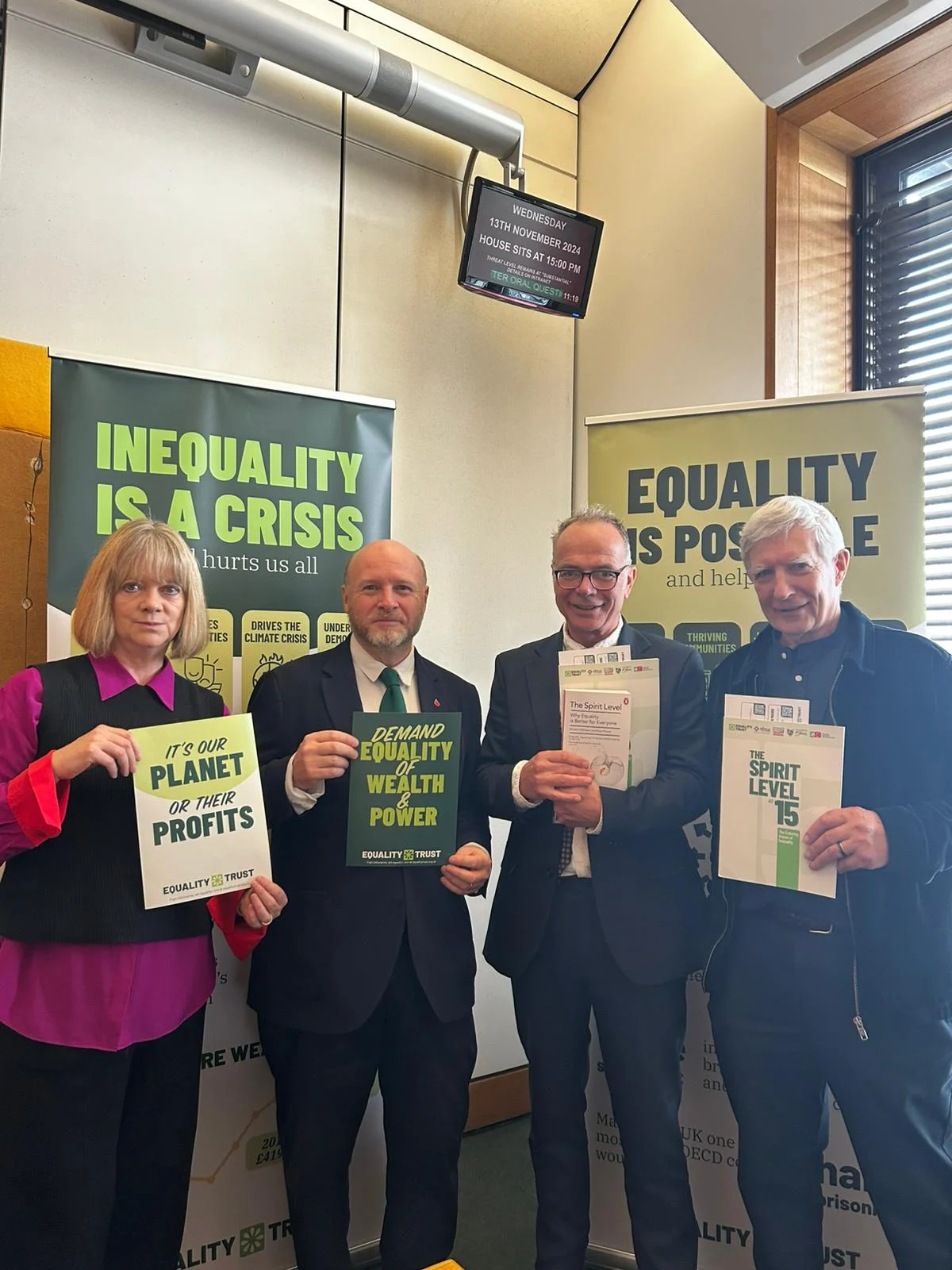
A critical component of the debate regarding Britain’s future is the influence of extreme wealth on political decision-making. A recent briefing by the Equality Trust, titled Money, Media and the Lords: How the Ultra-wealthy are Shaping Britain, highlights a feedback loop between concentrated capital and legislative influence. The report suggests that the drift toward the American model has fostered an environment where oligopolies reduce market competition and extract value from consumers rather than reinvesting in the domestic economy.
The briefing notes that the UK’s political culture has become increasingly susceptible to lobbying structures that favor the interests of the largest global players, particularly in the finance and technology sectors. This concentration of power makes it difficult for the government to implement policies that might redistribute wealth or empower local communities, as the legislative process is often weighted toward maintaining the status quo for high-net-worth individuals and multinational corporations.
Official Responses and Political Reactions
The response to the current crisis has been divided across the British political spectrum.
Priya Sahni-Nicholas, Co-Executive Director of the Equality Trust, has argued that the war in Iran should be a turning point. "The war is a human catastrophe, but it must also be the moment Britain finally asks which economic future it wants," Sahni-Nicholas stated. She emphasized that moving away from the American model is not merely a matter of changing diplomatic partners, but of fundamentally restructuring the domestic economy to work for the majority rather than a small elite.
Conversely, some members of the business community and the more traditional wings of the Conservative party express caution. A spokesperson for the Confederation of British Industry (CBI) noted, "While we recognize the need for greater economic resilience, the United States remains our largest single trading partner. Any pivot toward a more regulated European-style model must be managed with extreme care to avoid capital flight and a loss of competitiveness in the global tech race."
Meanwhile, representatives from the trade union movement have seized on the moment to advocate for a "New Deal" for workers. "The American model has failed the British worker," said a representative from the Trades Union Congress (TUC). "We see in Northern Europe that it is possible to have a high-performing economy that also respects labor rights and ensures a fair distribution of wealth. The crisis in Iran has shown us that the ‘Anglosphere’ gamble is no longer paying off."
Implications for Future Economic Strategy
If Britain chooses to pivot toward a more independent and equitable economic model, several policy shifts will be necessary. These include:
1. Community Wealth Building
Moving away from a reliance on overseas contractors and toward a strategy that builds capacity within the UK’s regions. This involves localizing procurement processes and ensuring that public spending supports local businesses and cooperatives, a model successfully pioneered in cities like Preston.
2. Technological Sovereignty
Developing a technology infrastructure that retains value within the UK. Currently, the UK’s digital economy is heavily reliant on American platforms that extract data and profits. A shift toward "sovereign tech" would involve investing in domestic alternatives and implementing stricter data localization and taxation laws for multinational tech giants.
3. Financial Regulation for the Productive Economy
Reforming the City of London to prioritize the "productive economy"—manufacturing, infrastructure, and green energy—over speculative financial markets. This would involve a stricter regulatory framework designed to prevent the kind of asset bubbles and market volatility often associated with the deregulated American financial sector.
4. Robust Competition Policy
Empowering regulators to break up oligopolies and prevent the excessive concentration of market power. By fostering a more competitive environment, the UK could ensure that economic policy is shaped by a broad range of stakeholders rather than a handful of powerful corporate owners.
Conclusion: A Genuine Crossroads
The war in Iran has acted as a stress test for the UK’s current geopolitical and economic arrangements. The human tragedy of the conflict serves as a sobering reminder of the stakes involved in international relations. For Britain, the choice is no longer just about who to stand with on the global stage, but what kind of society it wishes to be at home.
The current path—characterized by a dependency on an erratic superpower and an economic model that fosters extreme inequality—appears increasingly unsustainable. The alternative, modeled after the more equal and strategically autonomous economies of Northern Europe, offers a vision of a Britain that is more resilient, more independent, and more equitable. As the conflict in the Middle East continues to reshape the global order, the decisions made in London over the coming months will determine the trajectory of the British economy for the next generation. The question remains: will Britain choose to rebuild its economy for everyone, or will it remain tethered to a model that serves a dwindling elite?