Montgomery, Alabama prepares to host a profound Juneteenth observance at its renowned Legacy Sites, offering free admission to all four significant locations on Friday, June 19, from 8:30 am to 6:30 pm. This annual event provides a critical opportunity for visitors to engage with a comprehensive narrative of American history, spanning 400 years from enslavement and racial terror to the ongoing struggle for civil rights and justice. The Equal Justice Initiative (EJI), creators of these sites, emphasizes the importance of confronting the nation’s difficult past to foster a more equitable future, inviting the public to honor the resilience of millions of Black Americans and reckon with the enduring legacy of injustice.
The Enduring Significance of Juneteenth
Juneteenth, officially known as Juneteenth National Independence Day, commemorates the emancipation of enslaved African Americans. Its origins trace back to June 19, 1865, when Union Army General Gordon Granger arrived in Galveston, Texas, and issued General Order No. 3, announcing that all enslaved people in Texas were free. This declaration came more than two and a half years after President Abraham Lincoln’s Emancipation Proclamation, which had been issued on January 1, 1863. The delay in Texas was due to a combination of factors, including the limited presence of Union troops, logistical challenges in disseminating information, and resistance from slaveholders. For the approximately 250,000 enslaved people in Texas, General Order No. 3 marked their true freedom, making Juneteenth a symbol of delayed justice and the enduring pursuit of liberty.
Over the decades, Juneteenth evolved from a local Texas celebration into a national holiday, gaining federal recognition on June 17, 2021. It serves as a day of remembrance, reflection, and celebration of African American heritage and culture, while also acknowledging the long and arduous journey toward racial equality in the United States. Celebrating Juneteenth at sites specifically dedicated to the history of slavery and racial injustice, such as those in Montgomery, amplifies its educational and commemorative power, urging visitors to move beyond mere recognition to active understanding and advocacy.
Montgomery: A Crossroads of American History
Montgomery, Alabama, holds a unique and often contradictory place in American history. It served as the first capital of the Confederate States of America in 1861, embodying the nation’s deepest divisions over slavery. Decades later, it became the epicenter of the modern Civil Rights Movement, with pivotal events like the Montgomery Bus Boycott and the Selma to Montgomery Marches igniting a nationwide struggle for equality. This duality—a former bastion of white supremacy transformed into a cradle of civil rights—makes Montgomery an indispensable location for EJI’s Legacy Sites. The city’s landscape itself tells a story of profound injustice and extraordinary courage, providing a tangible connection to the historical narratives presented within the museum and memorial spaces. The choice of Montgomery as the home for these sites is deliberate, aiming to challenge visitors to confront the geographic and historical realities of American racial history head-on.
The Equal Justice Initiative: A Vision for Truth and Reconciliation
The Equal Justice Initiative (EJI), founded by renowned civil rights attorney Bryan Stevenson, is a non-profit organization dedicated to ending mass incarceration, challenging racial and economic injustice, and protecting basic human rights for the most vulnerable people in American society. EJI’s work extends beyond legal advocacy to include public education and historical reckoning, driven by the conviction that meaningful progress on racial justice requires a deeper understanding of the nation’s past. Stevenson and EJI believe that America cannot truly heal from its racial wounds without first confronting the truth of its history of slavery, racial terrorism, and segregation. The Legacy Sites in Montgomery are the physical manifestation of this philosophy, designed to immerse visitors in a narrative that demands reflection and inspires action. Their comprehensive approach to historical memory aims to shift the national consciousness and foster a more just society.
Exploring the Legacy Sites: A Journey Through 400 Years of Injustice and Resilience
The four Legacy Sites—the Legacy Museum, the National Memorial for Peace and Justice, Freedom Monument Sculpture Park, and Montgomery Square—collectively offer an unparalleled educational experience, guiding visitors through a profound historical journey.
The Legacy Museum: From Enslavement to Mass Incarceration
Located on the site of a former slave warehouse, the Legacy Museum: From Enslavement to Mass Incarceration employs a powerful blend of interactive media, historical artifacts, and immersive exhibits to trace a direct line from the transatlantic slave trade to contemporary issues of racial inequality and mass incarceration. The museum meticulously documents the dehumanization inherent in slavery, the terror of racial lynching, the indignities of Jim Crow segregation, and the enduring impact of these systems on the criminal justice system today. Visitors encounter holographic projections of enslaved people sharing their stories, witness the stark realities of slave pens, and confront the chilling statistics of racial terror lynchings. The museum’s narrative is designed to evoke empathy and understanding, highlighting how historical oppression has shaped the present landscape of racial injustice, particularly within the American carceral state. It serves as a stark reminder that the fight for civil rights did not end with the passage of landmark legislation but continues in new forms.
The National Memorial for Peace and Justice: Honoring Victims of Racial Terror
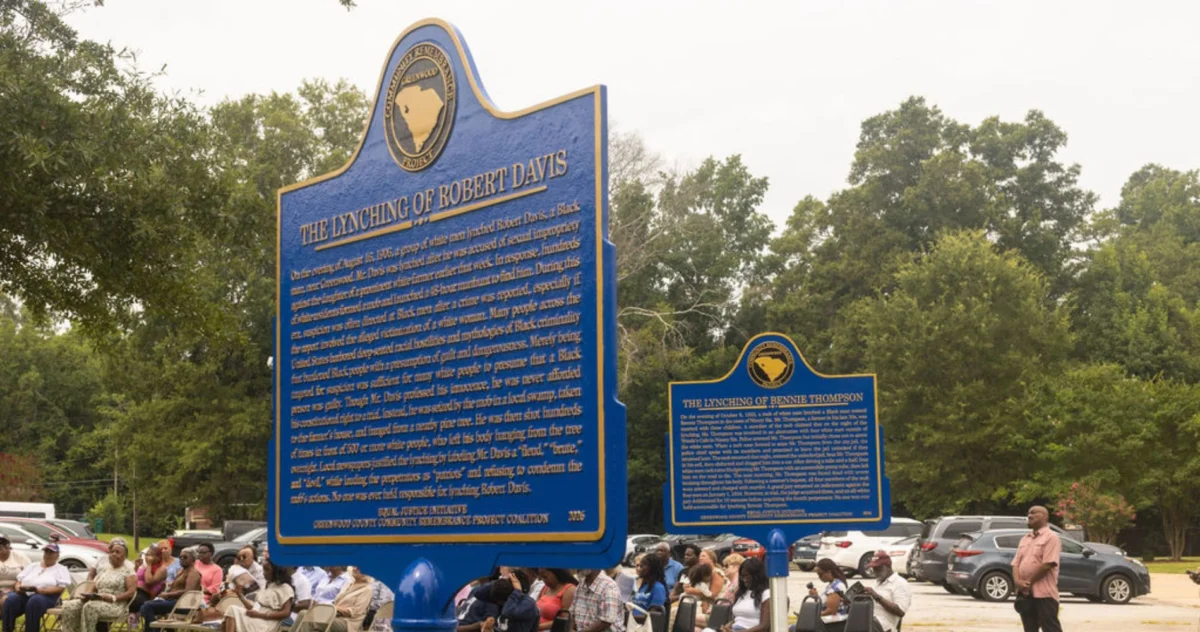
Perched atop a hill overlooking Montgomery, the National Memorial for Peace and Justice stands as a solemn monument to the more than 4,400 documented victims of racial terror lynchings in the United States between 1877 and 1950. Its distinctive design features 800 corten steel monuments, each representing a county where a racial terror lynching took place, engraved with the names of victims. The memorial invites visitors to walk among these towering structures, which initially stand at eye level but gradually rise above, creating a sense of overwhelming loss and the systematic nature of the violence. The experience is both profound and disturbing, forcing an acknowledgment of a largely unaddressed chapter of American history. Below the main structure, duplicates of these monuments lie horizontally, intended to be claimed by their respective counties for local remembrance, fostering a movement of truth-telling and reconciliation across the nation. This unique design emphasizes the widespread nature of racial terror and encourages communities to confront their own local histories of violence. The memorial, dedicated on April 26, 2018, stands as a permanent reminder of the imperative to reckon with America’s past to move towards a more just future.
Freedom Monument Sculpture Park: A Landscape of Memory and Resilience
Opened in March 2024, the Freedom Monument Sculpture Park, a sprawling 17-acre site along the banks of the Alabama River, offers a different kind of immersive experience. This outdoor museum specifically delves into the institution of slavery, the lives of enslaved people, and its enduring legacy. The park features a collection of commissioned art installations and historical markers that evoke the journeys, struggles, and triumphs of enslaved African Americans. Its location is strategically significant, situated near former slave-holding sites and the Alabama River, a key route for the domestic slave trade.
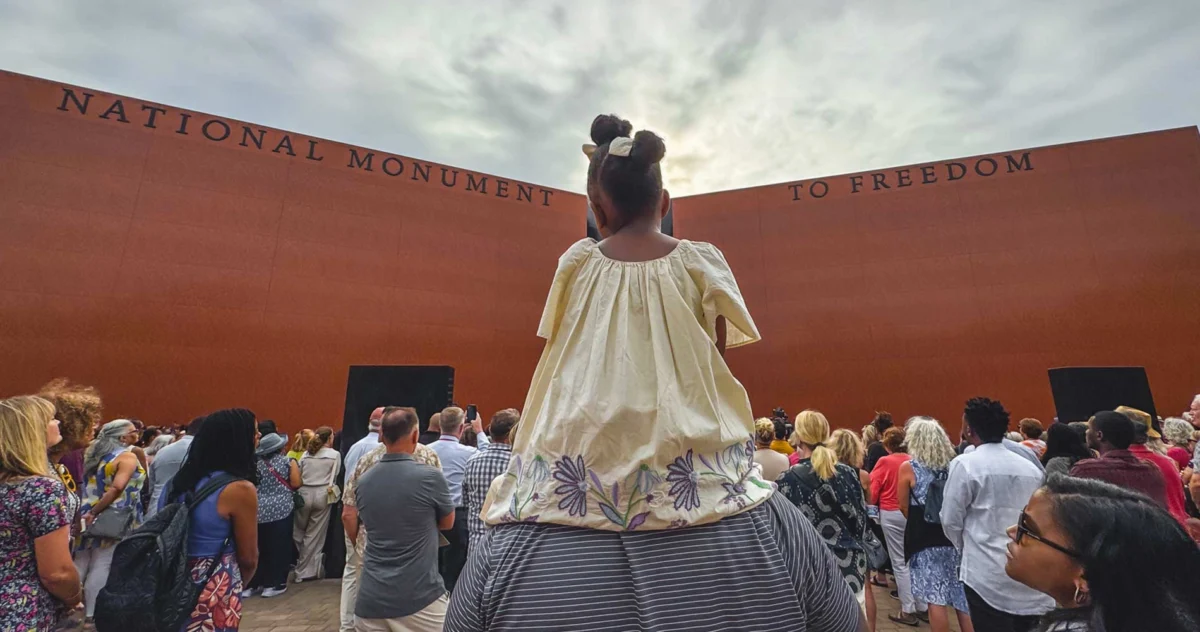
At the heart of the park is the soaring National Monument to Freedom, which was notably dedicated on Juneteenth. This monument is inscribed with 122,000 surnames—representing millions of Black families—connecting contemporary descendants to the courage, strength, and resilience of their formerly enslaved ancestors. For tens of millions of Americans, seeing their family names etched into this monument provides a powerful, tangible link to a past often obscured or denied. The park has quickly been hailed as an "essential American experience," particularly as the nation approaches its 250th birthday in 2026, offering a vital perspective on the foundational role of slavery in the nation’s development and the indomitable spirit of those who endured it. It provides a space for contemplation and a deeper understanding of the human cost and profound legacy of chattel slavery in America.
Montgomery Square: A Beacon of Activism and Voting Rights
The newest addition to the Legacy Sites, Montgomery Square, serves as a poignant reminder that racial injustice and threats to voting rights are not relics of the past but ongoing challenges that can be overcome through collective action. This site is dedicated to the pivotal decade of activism from 1955 to 1965, a period that began with the unprecedented and victorious resistance of the Montgomery Bus Boycott and culminated in the signing of the Voting Rights Act of 1965.
The Montgomery Bus Boycott, sparked by Rosa Parks’ courageous refusal to give up her seat in December 1955, lasted 381 days and became a foundational moment for the modern Civil Rights Movement. Led by figures like Dr. Martin Luther King Jr., the boycott demonstrated the power of nonviolent resistance and community solidarity, ultimately leading to the desegregation of Montgomery’s public transportation system following the Supreme Court’s ruling in Browder v. Gayle. Montgomery Square honors the spirit, lives, courage, and tenacity of those who worked together to change the nation, reminding visitors of the extraordinary determination required to challenge deeply entrenched systems of oppression. The site underscores the continuous struggle for voting rights, drawing parallels between historical disenfranchisement tactics and contemporary challenges to democratic participation, emphasizing that the fight for equal access to the ballot box remains critical.
Juneteenth at the Legacy Sites: An Educational Imperative
The decision to offer free admission to all Legacy Sites on Juneteenth underscores EJI’s commitment to making this vital history accessible to everyone. On this day, the sites transform into dynamic centers of public education and remembrance, inviting a diverse array of visitors to engage with the complex narratives of American history. For many, a visit on Juneteenth is not merely a historical tour but a pilgrimage—a powerful way to honor the lives and memories of the 10 million Black people who were enslaved in America and celebrate their courage and resilience. It is an opportunity for collective reckoning, personal reflection, and a shared commitment to justice.
The EJI’s approach emphasizes that understanding this history is not about assigning blame but about fostering accountability and promoting healing. By providing these resources without financial barrier on Juneteenth, EJI ensures that the stories of struggle and triumph are heard by a wider audience, facilitating a deeper national conversation about race, justice, and human dignity. The immersive experiences at each site are designed to leave a lasting impression, moving visitors from intellectual understanding to emotional engagement, thereby inspiring them to become agents of positive change in their own communities.
Broader Impact: Education, Reconciliation, and Tourism
The Legacy Sites have had a transformative impact not only on the national discourse around racial justice but also on Montgomery itself. Since their opening, they have attracted hundreds of thousands of visitors from across the globe, significantly boosting heritage tourism in the city. This influx of visitors has stimulated local businesses and created employment opportunities, demonstrating that confronting difficult history can also yield tangible economic benefits. More importantly, the sites have positioned Montgomery as a central hub for civil rights education and truth-telling, inviting people to learn from the past in a city that once epitomized racial segregation.
The EJI’s work in Montgomery contributes to a broader national and international movement for historical reconciliation. By meticulously documenting historical injustices and providing spaces for public mourning and reflection, the sites challenge visitors to consider their roles in shaping a more just future. The engagement with these powerful narratives encourages empathy, critical thinking, and a commitment to dismantling systemic inequalities that persist today. The sites serve as a living testament to the idea that memory is a powerful tool for change, reminding us that acknowledging historical suffering is a necessary step toward genuine reconciliation and progress.
EJI’s Ongoing Commitment and a Call to Action
The Equal Justice Initiative’s work is far from over. The Legacy Sites are not just museums or memorials; they are active platforms for ongoing dialogue and education. EJI continues its advocacy work, challenging unfair legal practices, fighting for criminal justice reform, and raising public awareness about racial injustice. The invitation to visit the sites on Juneteenth is a direct extension of this mission—a call for individuals to participate in the vital work of confronting injustice.
On this Juneteenth, visitors are encouraged to join EJI in Montgomery to reckon with the history of slavery and honor the lives of generations of people who endured and persevered, who hoped and loved, in the face of tremendous hardship and suffering. It is an invitation to experience the power of confronting injustice in this sacred place and to share in the strong conviction that "we’ve come too far to turn around now." The Legacy Sites stand as a powerful testament to the enduring human spirit and a beacon of hope for a future where justice, equality, and dignity prevail for all.