A year after the National Park Service (NPS) implemented a controversial directive to identify and potentially remove "negative" historical content from national parks, a comprehensive analysis of over 35,700 submitted public comments unequivocally reveals that the American people are "vehemently opposed to attempts to erase history and censor national parks." This finding, stemming from a review by the nonpartisan conservation and advocacy organization, the Center for Western Priorities (CWP), underscores a significant disconnect between public sentiment and the current administration’s historical revisionism agenda. Despite overwhelming public and expert criticism, the NPS has reportedly proceeded with the modification and removal of dozens of interpretive signs across its vast network.
Background and Genesis of the Executive Order
The origins of this contentious policy trace back to March 2025, when then-President Donald Trump signed an executive order titled "Restoring Truth and Sanity to American History." This directive emerged amidst a broader national debate concerning historical narratives, particularly those pertaining to race, colonialism, and the complexities of American heritage. The executive order mandated that the National Park Service undertake a thorough review and subsequent removal of any materials deemed to "inappropriately disparage Americans past or living (including persons living in colonial times)." The stated aim was to promote a more "patriotic" and less critical portrayal of the nation’s past, focusing on what the administration characterized as unifying aspects of American history.
The order was perceived by many historians, educators, and conservationists as a direct challenge to the NPS’s long-standing mission of providing comprehensive, accurate, and multifaceted historical interpretation. Traditionally, the NPS strives to present a full spectrum of American history, including its triumphs, struggles, and injustices, to foster a deeper understanding of the nation’s identity. Critics argued that the executive order risked transforming national parks from sites of education and reflection into venues for sanitized, triumphalist narratives that overlooked or downplayed uncomfortable truths.
Implementation of the Directive: QR Codes and Reporting Mechanism
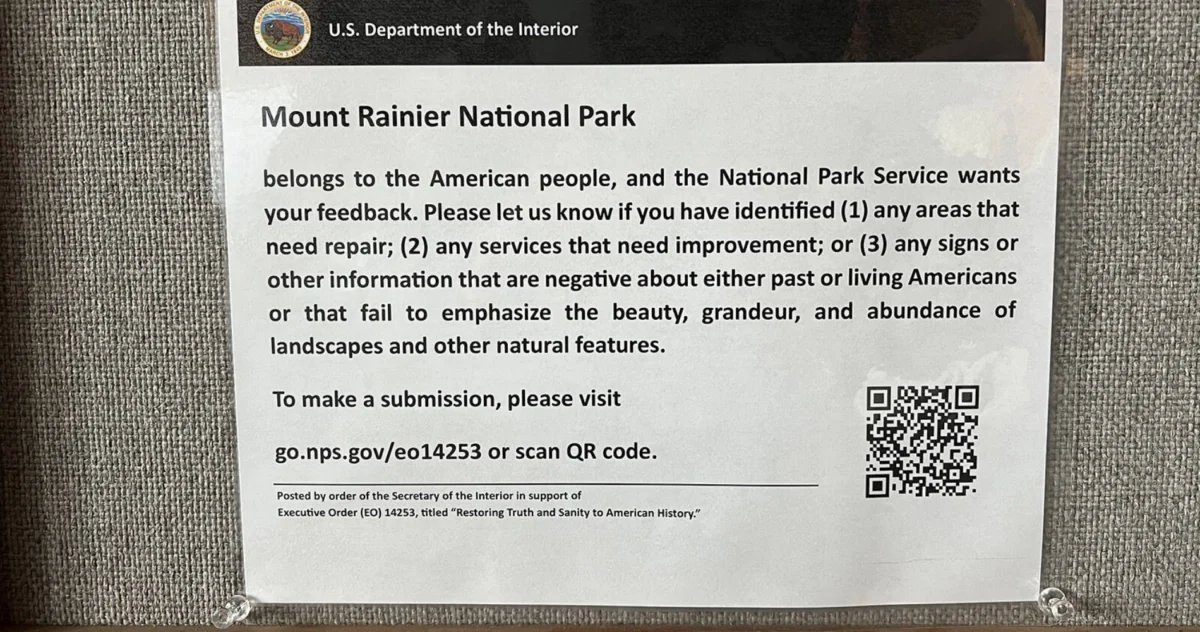
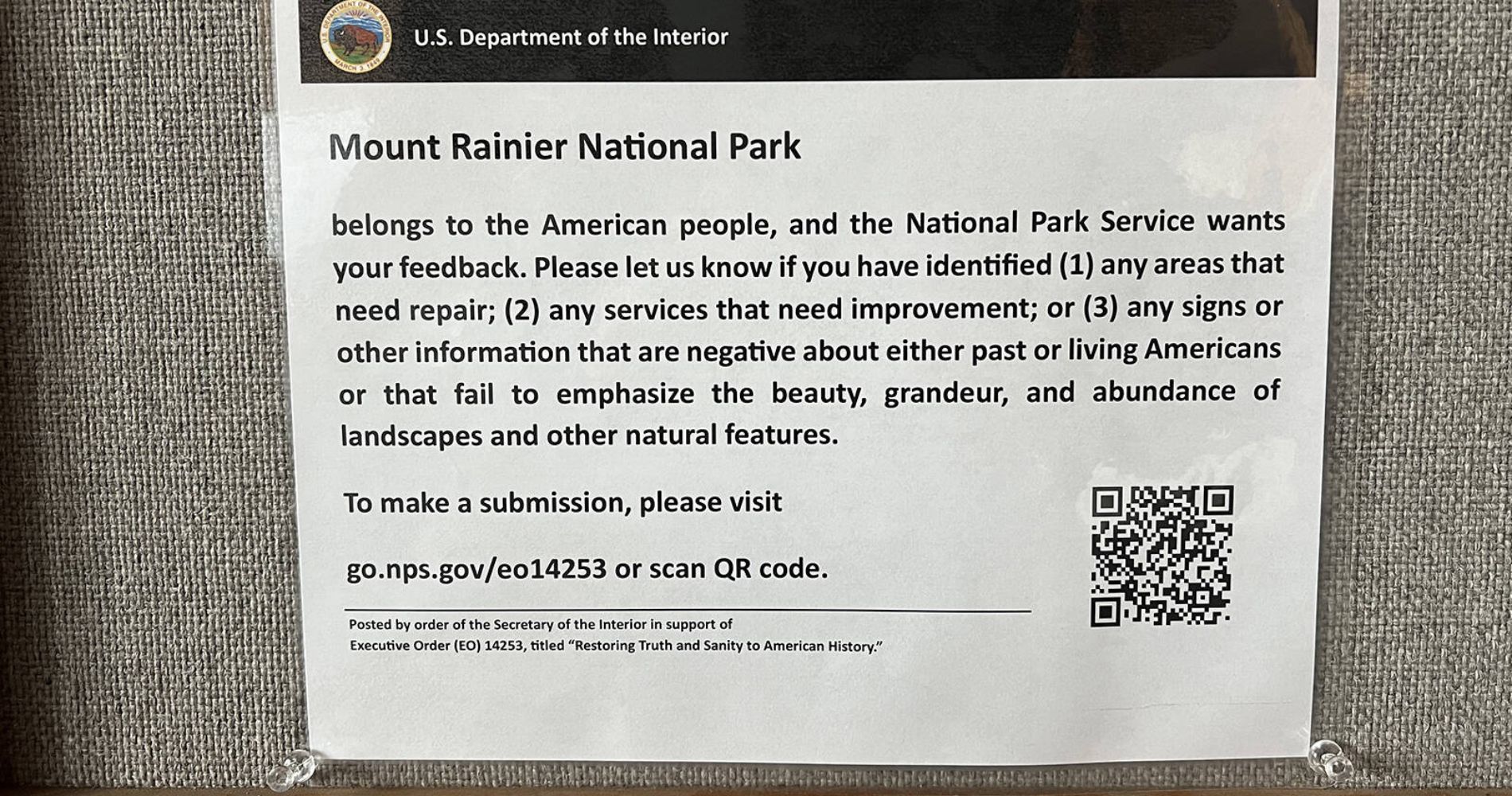
To operationalize the presidential directive, Interior Secretary Doug Burgum issued Secretary’s Order 3431, also titled "Restoring Truth and Sanity to American History." This order specifically instructed NPS staff to deploy QR code signs at various properties under the service’s purview. These signs were designed to solicit public feedback, urging visitors to identify "any signs or other information that are negative about either past or living Americans or that fail to emphasize the beauty, grandeur, and abundance of landscapes and other natural features."
The implementation of these QR codes sparked immediate concern among historical societies, academic institutions, and public interest groups. Many viewed the reporting mechanism as an invitation for subjective interpretation and potential censorship, rather than a genuine effort to improve historical accuracy or visitor experience. The broad and somewhat ambiguous definition of "negative content" raised fears that discussions of slavery, Indigenous displacement, women’s suffrage struggles, or environmental degradation could be targeted for removal, thereby presenting an incomplete or misleading historical record. The inclusion of language about emphasizing "beauty, grandeur, and abundance" further fueled anxieties that ecological challenges or the human impact on landscapes might also be downplayed.
The Public’s Response: Analysis of Submitted Comments
Approximately one year after the QR codes were first posted, in May 2026, the Interior Department released the full dataset of 35,700 comments submitted through this system. This release immediately became a focal point for independent analysis, providing the first tangible measure of public reaction to the administration’s controversial policy. While the sheer volume of comments might seem substantial, the Associated Press (AP) contextualized this figure, noting it represented a "tepid response" when considering that the National Park System recorded an astounding 323 million visits across its more than 400 sites in the preceding year. This implies that only a tiny fraction—roughly 0.01%—of visitors engaged with the QR code system, suggesting either a lack of awareness, disinterest, or perhaps a tacit rejection of its premise.
However, the true significance of the data lay not in the quantity of submissions but in their qualitative content. The Center for Western Priorities undertook an in-depth analysis of the entire dataset, meticulously categorizing and interpreting the varied responses. Their findings painted a stark picture of public sentiment that ran counter to the administration’s apparent intentions.
Detailed Findings from Center for Western Priorities
The CWP’s analysis, published in June 2026, revealed that out of the 35,700 comments, an astonishingly small number—just 47—actually aligned with the administration’s stated goal of flagging content for removal or expressed broad support for the historical revision effort. This tiny fraction represents approximately 0.13% of all submissions, highlighting the immense disparity between the directive’s intent and public reception.
Furthermore, even within these 47 comments, the CWP found significant nuance:
- Demand for Inclusive History: Twenty of these comments, far from supporting censorship, actually used the form to "demand more inclusive history and better representation in signage." This included specific instances where visitors pointed out that historical markers used racial slurs or failed to adequately acknowledge the contributions or experiences of marginalized communities. These submissions advocated for more comprehensive history, not less.
- Unclear, Satirical, or Factual Inaccuracies: Thirteen comments were categorized as unclear, satirical, or primarily focused on correcting factual inaccuracies in existing signage, rather than advocating for the removal of "negative" historical content.
- Administration’s Intended Use: This leaves a mere 14 visitors out of 35,700 who genuinely used the form to flag "negative" content as the administration intended. This minuscule number, representing a fraction of a percent of total submissions, strongly indicates a profound lack of public support for the directive.
Beyond these specific categorizations, the CWP’s analysis further underscored the overwhelming opposition. Even after filtering out coordinated "form letters" from advocacy groups that organized opposition across numerous parks—a common tactic in public comment periods—the CWP found that an astounding 99.8% of the remaining comments "defended historical accuracy, expressed support for the NPS, or pushed back against the order." This statistic is a powerful testament to the public’s desire for an honest and complete historical record within their national parks.
Associated Press Corroboration and Public Sentiment
The Center for Western Priorities’ findings were corroborated by an independent analysis conducted by the Associated Press, which also concluded that the vast majority of comments were critical of the effort itself. The AP highlighted several poignant examples of public feedback that encapsulated the prevailing sentiment:
- A visitor to a North Carolina park powerfully articulated their opposition, labeling the administration’s efforts as "un-American." This sentiment reflects a belief that open engagement with history, including its difficult aspects, is fundamental to democratic values.
- Another visitor objected to the divisive nature of the initiative, specifically criticizing "having Americans call in and snitch on each other," highlighting concerns about a climate of suspicion and ideological policing.
- Perhaps most tellingly, a visitor to Gateway Arch National Park in St. Louis wrote, "We had a great time learning about the development of this site including the difficult parts of our American story. We need those reminders to help us become even better in the future." This comment eloquently encapsulates the pedagogical value of acknowledging historical complexities and the role of national parks as sites for learning and societal improvement.
These public reactions collectively demonstrate a strong preference among park visitors for historical integrity and an aversion to politically motivated attempts to reshape the narrative presented at these cherished national treasures. The comments suggest that for many Americans, confronting difficult historical truths is not a source of disparagement but an essential component of understanding national identity and progress.
Despite Opposition: Continued Sign Changes and Removals
Despite the unequivocal public opposition demonstrated by the submitted comments and the analyses from both the Center for Western Priorities and the Associated Press, reports indicate that the National Park Service has continued to implement the executive order. The AP reported that the NPS has already changed or removed dozens of signs across the national park system, prioritizing the administrative directive over the expressed will of the public and expert recommendations.
This ongoing action raises serious questions about the purpose of public comment periods if the feedback is largely disregarded. It suggests that the administration may be proceeding with its agenda regardless of widespread public disapproval, undermining the very concept of public engagement in federal land management.
Watchdog Efforts: "Save Our Signs" and the "People’s Archive"
In response to the perceived threat to historical integrity within national parks, watchdog groups have emerged to monitor and document the changes. One such organization, "Save Our Signs," was founded by a coalition of librarians, public historians, and data experts. Their mission is to systematically track and publicize instances of sign removal or modification within the national park system.
According to Jenny McBurney, a University of Minnesota librarian and a founding member of Save Our Signs, the group has meticulously documented the removal or modification of at least 59 signs to date. These documented changes include interpretive panels related to sensitive but crucial historical topics such as slavery, women’s rights, and Native American history. The removal of such signs, critics argue, diminishes the educational value of the parks and risks creating historical voids, particularly concerning narratives that challenge dominant historical interpretations.
To counter these efforts and preserve a record of the historical content that is being targeted, Save Our Signs is actively building a "People’s Archive." This crowdsourced initiative encourages park visitors from across the country to submit photos of existing signs and exhibits. The archive serves as a crucial repository, ensuring that if official signage is altered or removed, a public record of the original historical interpretation remains accessible. This grassroots effort underscores the public’s commitment to historical accuracy and their proactive role in safeguarding the educational mission of national parks.
Ms. McBurney emphasized the significance of these efforts, stating, "We hear from folks all over the country that history matters, that our national parks matter and that this is important to them." Her statement highlights the deep emotional and intellectual connection many Americans have to their national parks as sites of both natural beauty and profound historical learning.
Broader Implications for Historical Interpretation and Public Trust
The controversy surrounding the National Park Service’s historical content policy carries significant broader implications. Firstly, it strikes at the heart of historical interpretation in public spaces. The debate over what constitutes "negative" or "positive" history is fundamentally a contest over national identity and memory. Attempts to sanitize or selectively present history risk fostering a shallow understanding of the past, hindering critical thinking, and potentially repeating past mistakes.
Secondly, the episode has implications for public trust in government agencies. When public feedback is demonstrably ignored in favor of politically motivated directives, it erodes confidence in the transparency and accountability of federal institutions. The NPS, traditionally seen as a non-political steward of national treasures, finds itself embroiled in a culture war, which could compromise its long-term credibility and its ability to fulfill its core mission of preservation and education without ideological interference.
Finally, this situation underscores the ongoing challenges in navigating complex historical narratives in a diverse society. While calls for unity and patriotism are often voiced, the means by which these are pursued—especially through the erasure or downplaying of difficult historical facts—can prove deeply divisive. The public’s overwhelming rejection of the "negative content" directive suggests a widespread desire for a robust, honest, and inclusive national story, even if that story includes painful chapters. The continued efforts by organizations like Save Our Signs demonstrate a resilient public commitment to ensuring that national parks remain places where all facets of American history can be explored and understood, rather than selectively celebrated or censored.