Over the past year, the United States has witnessed a dramatic escalation in immigration enforcement actions, characterized by widespread raids and aggressive tactics employed by U.S. Immigration and Customs Enforcement (ICE) and U.S. Customs and Border Protection (CBP). These operations, often described as brutal, have sent shockwaves through communities that have long been integral to the fabric of American society. The increased tempo and scope of these enforcement actions have transformed neighborhoods, schools, places of worship, and workplaces into zones of heightened anxiety and fear for immigrants, refugees, asylum seekers, and their allies. The chilling reality of these intensified operations was tragically underscored by the deaths of Renee Good and Alex Pretti, who were killed by ICE and CBP officers during enforcement actions, highlighting the dangerous and often violent nature of these encounters.
The impetus for this surge in enforcement activity appears to stem from a directive issued by Deputy White House Chief of Staff Stephen Miller and Department of Homeland Security (DHS) Secretary Kristi Noem. This directive reportedly aims to increase daily arrests of immigrants, with targets set at an unprecedented 3,000 individuals per day. This aggressive pursuit has fostered a climate of pervasive fear and uncertainty, particularly as evidence suggests that ICE and CBP are not exclusively targeting individuals with criminal convictions, contrary to initial promises. Instead, a significant number of individuals apprehended are reportedly those who pose no threat to public safety and, in fact, contribute substantially to the nation’s economy and social cohesion.
This intensified enforcement posture is underpinned by substantial financial allocations. In the preceding fiscal year, Congress granted the Department of Homeland Security a substantial $170 billion for immigration enforcement, a figure unprecedented in its scope and intended to dramatically expand the agency’s capacity for targeting, detaining, and deporting immigrants nationwide. As of the time of this report, Congress has been engaged in debates regarding further funding for ICE and CBP operations. However, advocacy efforts have seemingly had an impact, as no new funding has yet been allocated to the DHS for immigration enforcement operations in the current fiscal year.
Understanding the Agencies: ICE and CBP
U.S. Immigration and Customs Enforcement (ICE) operates as a principal agency within the Department of Homeland Security (DHS). Its core mandate encompasses the apprehension, detention, and deportation of individuals within the United States who are found to be in violation of immigration laws. ICE deportation officers are primarily responsible for conducting the majority of immigrant apprehensions within the interior of the country.
ICE maintains a significant operational footprint, employing over 22,000 law enforcement and support personnel across more than 200 detention facilities. A considerable portion of these facilities are operated through private contracts. The passage of the "One Big Beautiful Bill Act" in the previous year is reported to have substantially augmented ICE’s capacity, leading to an increase in deportation officers and detention facilities, thereby accelerating the agency’s ability to conduct raids across the nation.
U.S. Customs and Border Protection (CBP), also a component of DHS, is primarily tasked with securing the nation’s borders. CBP officers possess broad authority to stop, question, and search individuals and their property at all U.S. ports of entry. Historically, CBP operations were largely confined to areas within 100 miles of a border or port of entry.
However, both ICE and CBP have expanded their operational reach. These agencies now assert the authority to interrogate any individual they suspect of being an immigrant and to conduct warrantless arrests anywhere within the United States, irrespective of proximity to a border. The current administration has increasingly deployed CBP officers for what are described as "roving patrols" across the country, which critics argue have instilled fear within immigrant communities. The tragic shooting death of Alex Pretti in Minneapolis by CBP officers, a U.S. citizen who intervened in an incident, serves as a stark example of the volatile encounters involving these agents.
A Shift in Enforcement: The Trump Administration Era
The enforcement strategies and operational scope of ICE and CBP have undergone a marked transformation since President Trump assumed office. Currently, ICE custody holds approximately 73,000 immigrants, marking the highest number ever recorded and an 84% increase compared to January 2025 figures. Disturbingly, over 70% of these detainees reportedly have no criminal record, and 95% have never been convicted of a violent crime. This statistic directly contradicts the administration’s stated focus on apprehending violent criminals. The year 2025 was the deadliest on record for ICE custody, with 32 individuals dying while detained. In the early months of 2026, six deaths have already been reported within ICE detention facilities.
The administration’s efforts to rapidly escalate apprehensions and raids have moved beyond the precedents set by previous administrations. ICE has reportedly targeted individuals in a variety of settings, including workplaces, farms, university campuses, private residences, and during routine traffic stops. Furthermore, a bipartisan policy that previously restricted raids in sensitive locations such as schools, places of worship, and hospitals has been rescinded.
These stringent policies have persisted despite acknowledgments from within the administration that they could negatively impact the American economy. The administration has also actively pursued punitive measures against "sanctuary jurisdictions"—cities and states that limit cooperation with ICE—through legal challenges and the withholding of federal funds.
The Impact of Aggressive Tactics
The aggressive and pervasive nature of ICE’s operations has instilled profound fear within immigrant communities across the United States. This heightened climate of apprehension has far-reaching consequences, discouraging immigrants and their children from attending school, seeking essential medical care, traveling, or going to work. These disruptions have detrimental effects not only on the individuals and families directly impacted but also on the broader societal and economic landscape of the nation.

Moreover, the Trump administration’s surge in deportations has frequently occurred at the expense of due process. The prioritization of speed and perceived political gains over the established legal protections afforded to immigrants has raised significant concerns. These widespread raids and aggressive enforcement actions also divert attention from the urgent need for practical policy solutions and comprehensive reform of the U.S. immigration system.
Community Response and Calls to Action
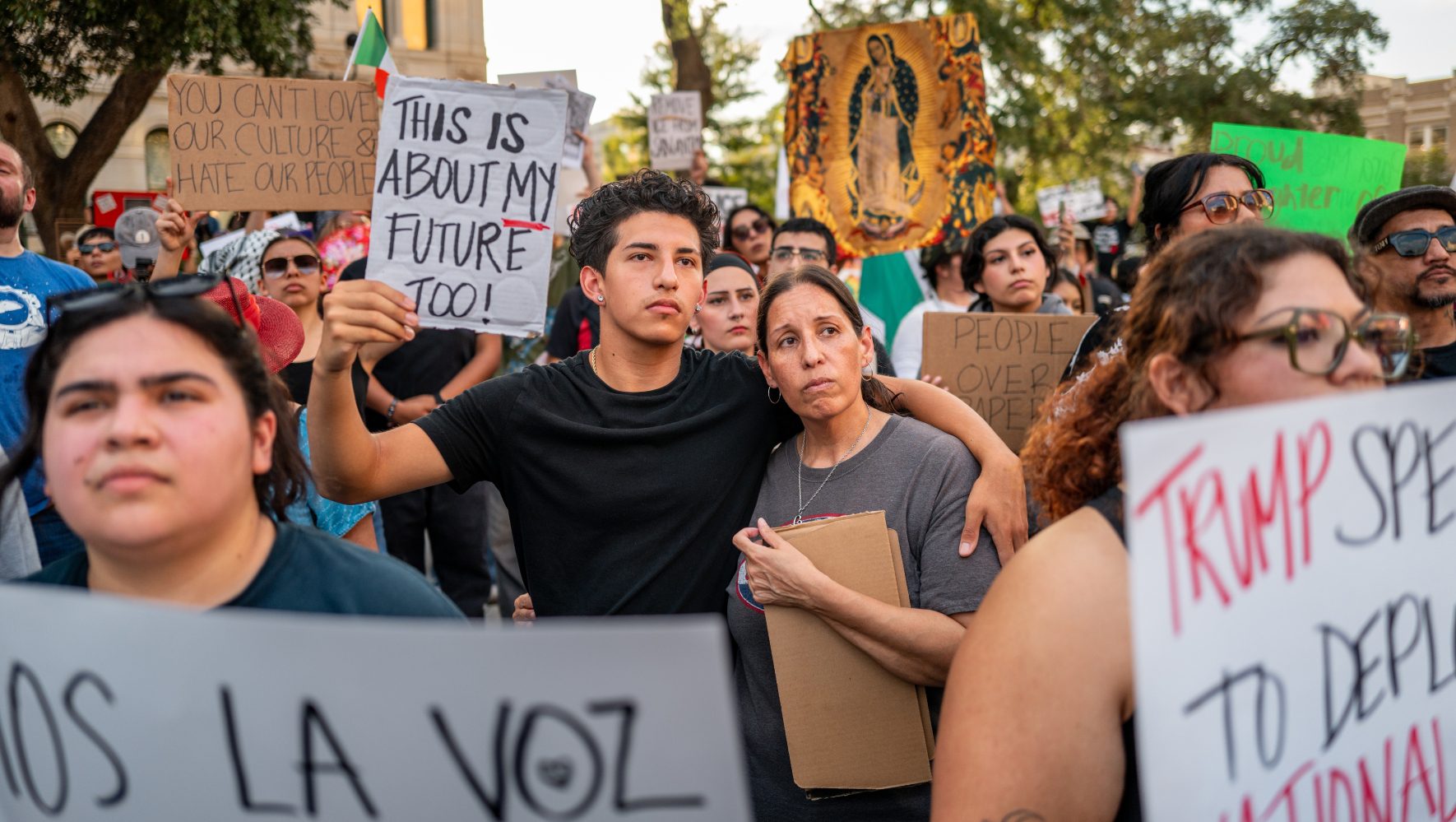
In response to these intensified enforcement measures, communities and advocacy groups have mobilized. Protests have been organized in various cities, including San Antonio, Texas, where individuals gathered outside City Hall to voice their opposition to ICE raids. These demonstrations reflect a growing public concern over the human rights implications of current immigration policies and the erosion of protections for vulnerable populations.
HIAS, the oldest refugee agency in the world, has consistently advocated for the rights of refugees and immigrants, regardless of political administrations. The organization emphasizes its commitment to supporting its clients and calls for public engagement to counter what it describes as a cruel and damaging immigration enforcement agenda.
For individuals seeking to contribute to the cause, HIAS outlines several avenues for action. These include providing legal support to immigrants, engaging with elected officials, and participating in advocacy efforts. The organization highlights seven specific ways individuals can take action to support immigrants, underscoring the role of citizen engagement in shaping immigration policy and protecting the rights of vulnerable populations.
The ongoing situation represents a critical juncture in U.S. immigration policy, with significant implications for human rights, community well-being, and the nation’s commitment to due process and humanitarian values. The debate over immigration enforcement continues, with advocates and policymakers grappling with the complex challenges of border security, humanitarian concerns, and the integration of immigrant communities.
This article was originally published on June 27, 2025, and updated on February 20, 2026.