
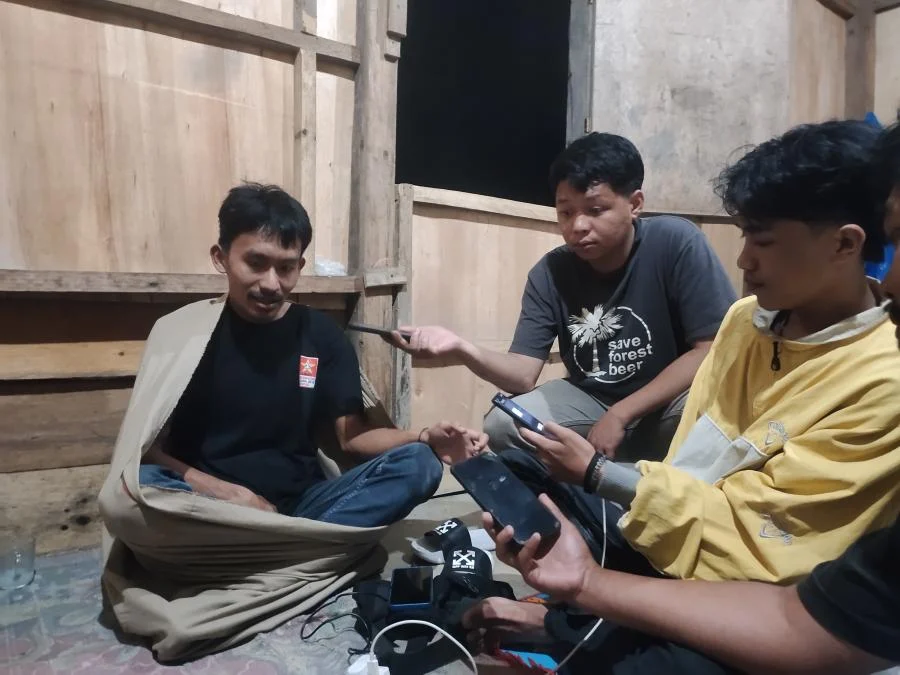
Across the dense rainforests of Jambi and the volcanic highlands of Java, a silent revolution in storytelling is quietly reshaping how the struggles of Indonesia’s traditional communities are documented. For decades, Indigenous groups battling corporate encroachment, illegal land grabs, and environmental degradation faced an invisible barrier: the mainstream media’s geographic and systemic indifference. Remote land disputes rarely made the front pages of national newspapers, leaving marginalized communities isolated in their legal and physical defenses of customary territories known as wilayah adat.
Today, that paradigm is undergoing a fundamental transformation. A growing grassroots network of Indigenous journalists is taking media representation into their own hands, deploying modern digital publishing tools to protect their customary forests and broadcast the realities of intense local land conflicts to the wider world. Spearheaded by a specialized training initiative organized by the Indigenous Peoples Alliance of the Archipelago (AMAN), dozens of community members with no prior journalistic background have stepped out of the shadows of neglect and into the active role of frontline reporters.
By empowering individuals from diverse backgrounds—including the Osing of Banyuwangi and the Kasepuhan communities—the initiative has established a vital bridge between isolated regional struggles and national public consciousness. Through rigorous instruction in fact-checking, interviewing techniques, and journalistic news writing, these new reporters are building a self-reliant media apparatus. No longer willing to wait for outside reporters to parachute in, interpret, and frequently misrepresent their realities, these Indigenous scribes are asserting total ownership over their histories, their grievances, and their futures.
Background Context of Marginalization and Mainstream Media Gaps
The systemic invisibility of Indigenous communities within Indonesian media is not merely an oversight; it is a structural deficiency rooted in historical inequalities and logistical challenges. Mainstream media outlets in Jakarta and provincial capitals have historically operated under economic and infrastructural constraints that make sustained, ground-level reporting in remote regions financially unviable. Consequently, stories concerning the dispossession of ancestral lands, the destruction of sacred sites by extractive industries, and human rights violations against native defenders have been severely underreported.
When mainstream outlets did cover Indigenous issues, the framing was frequently problematic. Stories often depicted traditional communities through a lens of romanticized primitivism or as passive obstacles to national economic development. Complex legal battles involving customary rights (hak ulayat) were frequently oversimplified, reducing multifaceted sovereignty struggles to simple property disputes. Furthermore, language barriers, bureaucratic red tape, and the physical remoteness of customary forests created formidable impediments for metropolitan journalists attempting to cover crises on the ground.
Recognizing these profound systemic limitations, AMAN determined that sustainable advocacy required a complete democratization of the media. If the narrative of Indonesian development was to include the preservation of ecological diversity and cultural heritage, Indigenous peoples themselves needed the technical capacity to document, verify, and broadcast their own truths. This realization catalyzed the development of an intensive journalism incubator designed specifically for members of customary communities who possess firsthand experience of the conflicts unfolding in their backyards.
Chronology of the Movement: From Inception to National Consolidation
The path toward an autonomous Indigenous press in Java and Jambi has evolved through distinct phases of capacity building, digital deployment, and institutional formalization.
Phase 1: Identifying the Need and Designing the Curriculum
In the years preceding the formal launch of the training program, AMAN documented a sharp escalation in land conflicts across Java and Jambi. Driven by agricultural expansion, mining concessions, and infrastructure projects, customary forests were increasingly threatened. Local leaders realized that legal documentation alone—such as mapping ancestral domains—was insufficient without a concurrent public relations strategy to expose rights violations in real-time. Planning for a specialized journalistic workshop began, partnering with media literacy advocates and seasoned journalists.
Phase 2: Intensive Training and Skill Acquisition
A cohort of 32 men and women representing various Indigenous groups, including the Osing, Banyuwangi, and Kasepuhan, was assembled for a rigorous training regimen. Over the course of the program, participants transitioned from novices to active reporters. The curriculum was tailored to address the specific realities of reporting in conflict zones, emphasizing rigorous fact-checking to withstand legal scrutiny from corporate adversaries, ethical interviewing protocols to protect vulnerable sources, and narrative construction tailored for digital distribution.
Phase 3: Digital Deployment and Platform Integration
Upon completing the training, the newly minted reporters immediately began producing content. Articles, photoessays, and multimedia reports were systematically distributed across multiple digital touchpoints, including the official AMAN portal, Tempo Witness, and various social media ecosystems. This multi-channel approach circumvented traditional publishing gatekeepers, allowing local stories to bypass editorial bottlenecks and reach unprecedented national and international audiences.
Phase 4: Institutionalization and the Birth of AJMAN
The rapid proliferation of published content and the surge in cross-regional collaboration culminated in a historic milestone: the official consolidation of the Association of Indigenous Journalists of the Archipelago (AJMAN). Designed as a permanent national network, AJMAN now serves as an institutional backbone for native reporters, facilitating ongoing peer support, collaborative investigations, and the continuous exchange of information across island boundaries.
Supporting Data and Quantitative Metrics
While qualitative accounts of empowerment are central to the movement, the structural success of the AMAN-led initiative is underscored by measurable benchmarks across participation, output, and reach:
- Trained Personnel: A foundational cohort of 32 Indigenous men and women successfully completed the initial intensive training cycle across Java and Jambi.
- Demographic Representation: Organizers intentionally prioritized inclusivity, achieving high participation rates among women and younger community members—demographics historically underrepresented in customary leadership structures.
- Platform Distribution: Content is currently syndicated across at least three primary digital distribution hubs—the AMAN institutional website, Tempo Witness, and aggregated social media channels—multiplying audience reach exponentially compared to historic local bulletins.
- Geographic Scope: The network actively covers Indigenous enclaves spanning two of Indonesia’s most densely populated and heavily contested islands, encompassing distinct cultural groups such as the Osing, Kasepuhan, and Lake Sipin communities.
- Institutional Expansion: The formation of AJMAN represents a 100% transition from ad-hoc training sessions to a permanent, self-governing national press association.
Official Responses and Stakeholder Perspectives
The emergence of this grassroots press network has elicited strong endorsements from both veteran journalism trainers and Indigenous community leaders who recognize the profound stakes involved.
Agung Sedayu, an experienced trainer affiliated with Tempo Witness, emphasized the indispensable role that native reporters play in altering the national discourse. "Indigenous journalists are the main spearhead of the resistance and struggle of our Indigenous friends who are fighting for their rights," Sedayu stated. "Issues concerning Indigenous Peoples have not been widely covered or published by mainstream media. The stories, aspirations, voices, and resistance of Indigenous Peoples demanding their rights must be voiced and published by the Indigenous Peoples themselves."
For the participants on the front lines, the acquisition of journalistic tools has transformed abstract legal grievances into concrete public records. Zenba Bimbi Galuh, a training participant and member of the AJMAN National Council for the Java region, articulated the direct benefits of the program. "The benefit of this training for me and my fellow members is to enhance our skills regarding news coverage and proper, accurate writing," Galuh explained. "We can now convey the rights of Indigenous communities that have never been heard before."
Apriadi Gunawan, Chairperson of AJMAN, underscored the philosophical shift driving the organization’s existence. Reflecting on the historical abandonment of rural communities by metropolitan newsrooms, Gunawan noted a profound sense of self-reliance. "We can no longer rely on mainstream media to communicate or report on all the issues occurring in our communities; it is now up to us to take on that responsibility and play that role."
The integration of younger generations has been heralded as crucial for the long-term sustainability of the movement. Shakila, a participant hailing from the Lake Sipin community in Jambi, highlighted the enthusiasm of youth in documenting their heritage. "This training is extremely important, especially since young people are eager to explore new things and learn about Indigenous communities," Shakila observed. "Because many of them have not been exposed before, we can give them a voice here."
Broader Impact and Implications for Indonesian Society
The institutionalization of Indigenous journalism through AJMAN carries wide-ranging implications for the future of land rights, environmental conservation, and human rights advocacy in Indonesia. By establishing an independent archive of ongoing legal battles and historical grievances, these communities are insulating themselves against historical erasure.
- Evidentiary Value in Legal Proceedings: Accurate, fact-checked reporting produced by community journalists often serves as a vital public record. In land disputes where corporate entities or state bodies contest the historical presence of Indigenous groups, contemporaneous journalism can provide corroborating documentation that strengthens legal defense strategies in land courts.
- Accountability for Extractive Industries: Corporations operating in remote areas of Java and Jambi can no longer rely on geographic isolation to obscure environmental violations. The instantaneous nature of digital reporting ensures that illegal deforestation, pollution, and intimidation tactics are documented and beamed to national regulators and international watchdogs in real-time.
- Cultural Preservation and Intergenerational Transfer: As younger community members take up cameras and notebooks, they are forced to deeply engage with elders, traditional ecological knowledge, and customary governance structures. This journalistic fieldwork acts as an organic educational tool, bridging the generational divide and reinforcing cultural identity among youth susceptible to urbanization.
- Reshaping National Policy Debates: As AJMAN expands its reach, the cumulative volume of native-authored news exerts subtle yet persistent pressure on policymakers in Jakarta. Issues that were once easily dismissed as localized friction are increasingly framed as systemic national human rights concerns, forcing political actors to reckon with the constitutional rights of traditional populations.
Future Outlook and Sustainability
Looking toward the horizon, AMAN and the leadership of AJMAN are committed to ensuring that this journalistic momentum does not fade. Plans are currently underway to institutionalize regular coordination meetings, advanced investigative reporting workshops, and peer-review mechanisms to maintain high editorial standards across the network.
As digital literacy continues to penetrate remote regions, and as young Indigenous writers increasingly step forward to claim their rightful place in the public sphere, the movement is fundamentally altering the architecture of Indonesian journalism. By seizing control of their own narratives, the Indigenous peoples of Java and Jambi are proving that the most authentic and enduring defense of ancestral land begins with the power to tell the truth.




